Twin Studies
The ongoing series investigates how small acts of will accumulate over time and lead to divergences. Each artwork begins with an acceptance of the circumstances, then tracks how choices, reactions, and perseverance impact the same underlying terrain.
I treat the torn paper and the random stains as a shared “DNA”, the starting point that neither twin can control. On top of this, I draw topographical lines, tracing a unique path for each.
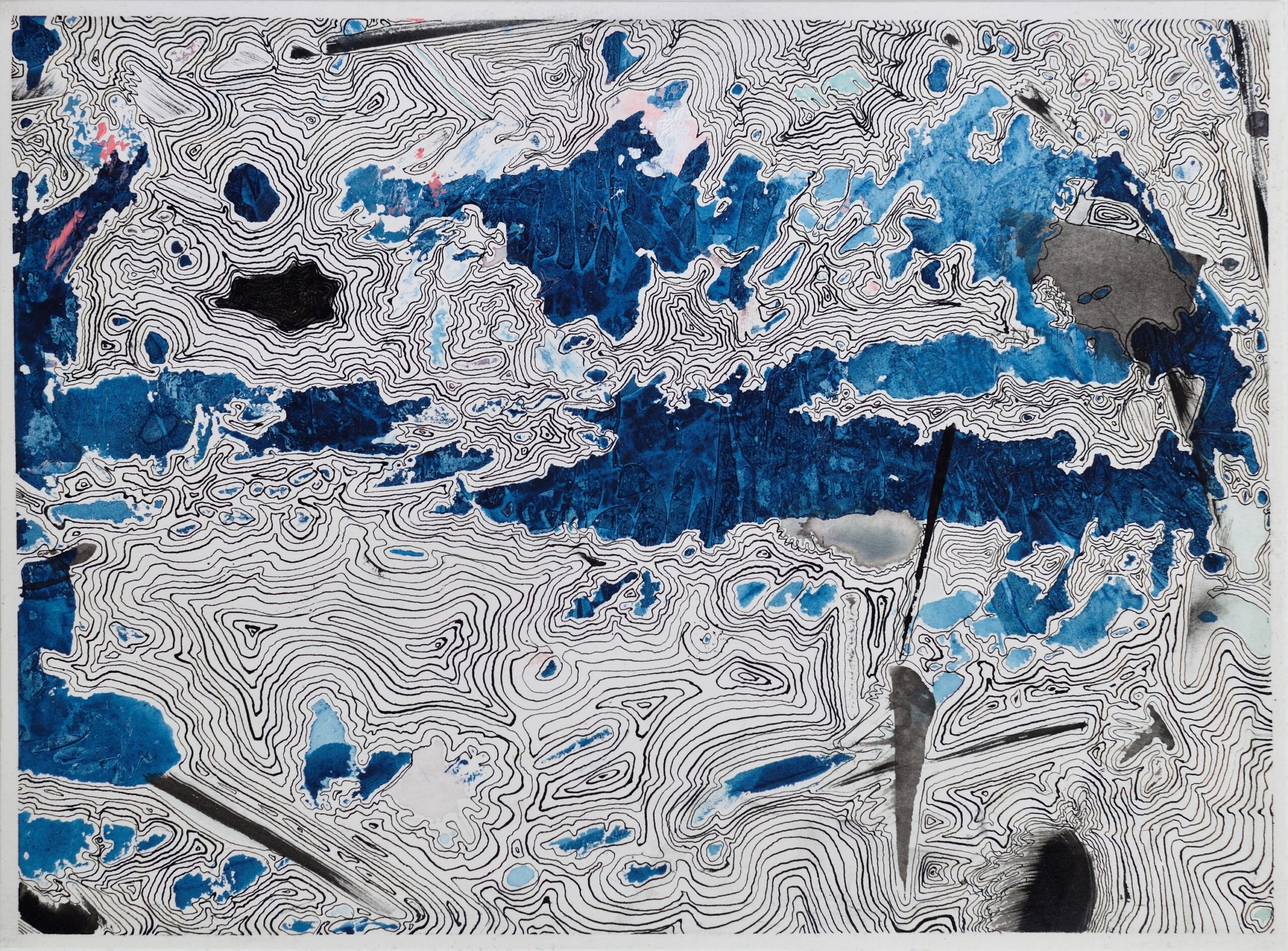
The World, 2025
Acrylic and Indian ink on cotton rag
21 x 29.7 cm
An accidental painting of the World. Unlike the rest of the series, this painting does not have a pair. It is the origin that opened the dialogue: How much influence do we have over our lives?
A sheet of paper was stretched for watercolor painting. An unintended spill of indigo ink derailed the plan. The paper lay untouched for five years: stretched, stained, unresolved. The stain was a condition: unchosen, irreversible, and given. By creating a new topography, the damaged surface ultimately transformed into a source of creativity.
The work demonstrates that meaning arises from a continuous interplay, in which what is given to us and our formative actions constantly generate one another anew.
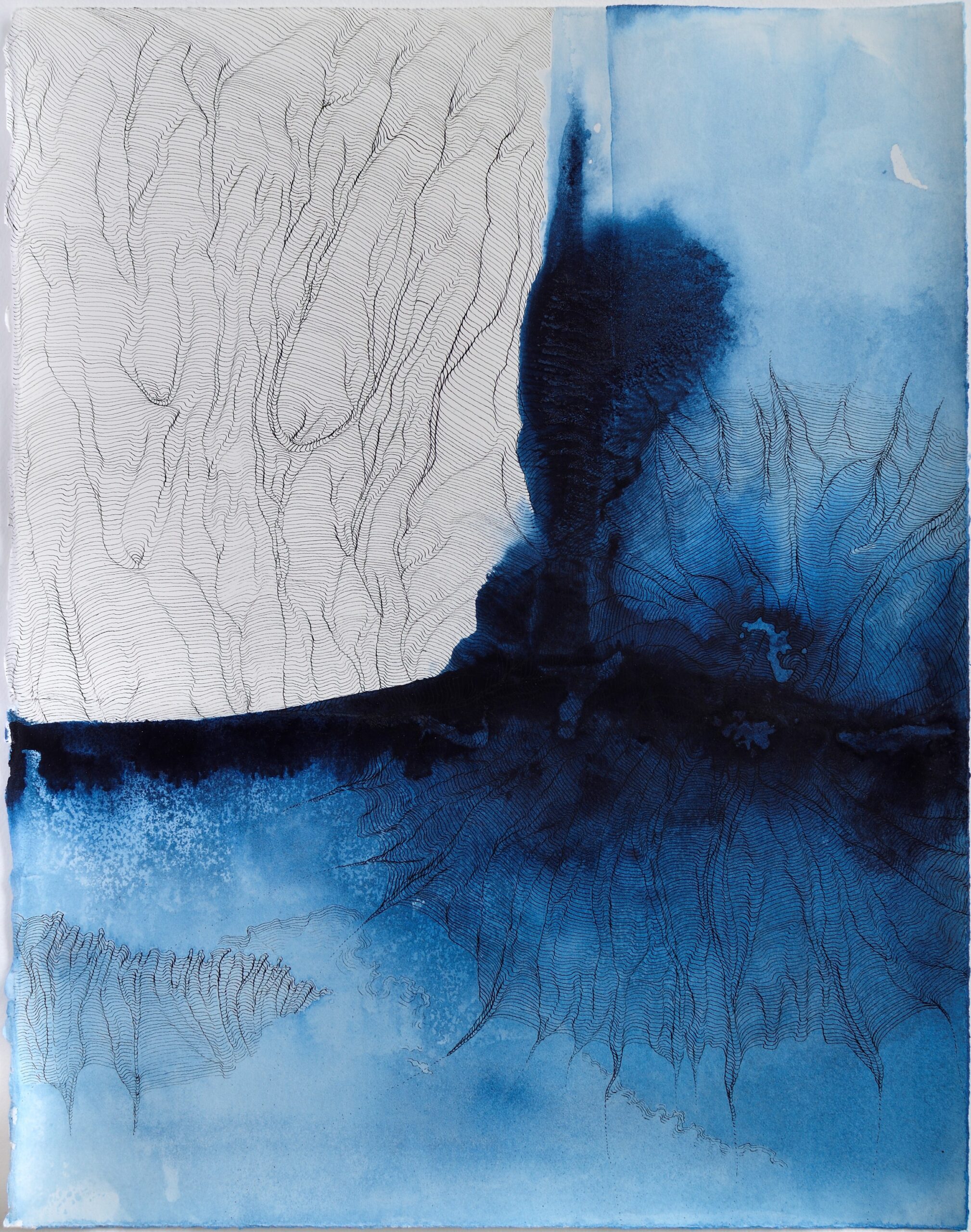
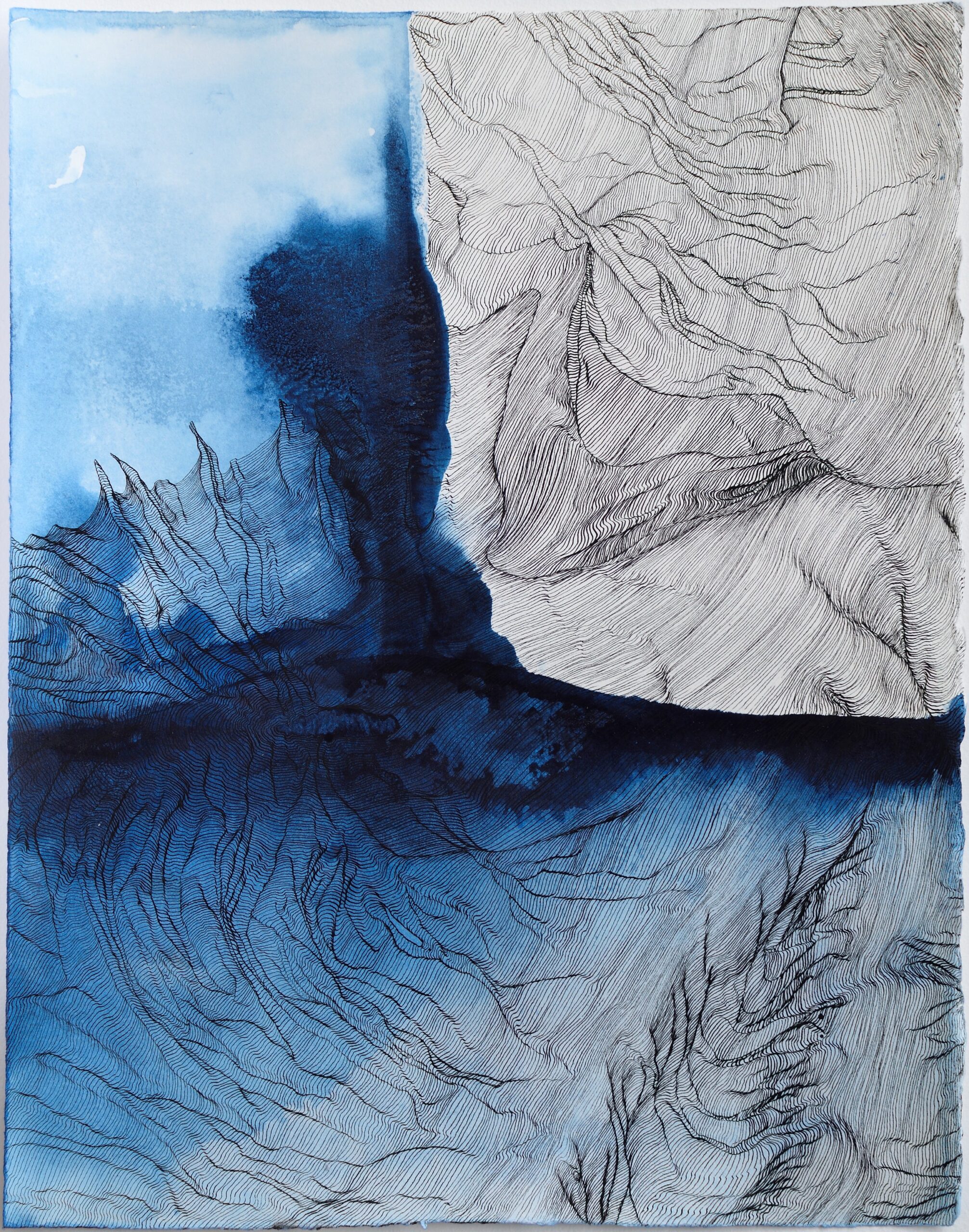
The Strait, 2026
Acrylic and Indian ink on cotton rag
Diptych, 28.5 x 36.3 cm (each)
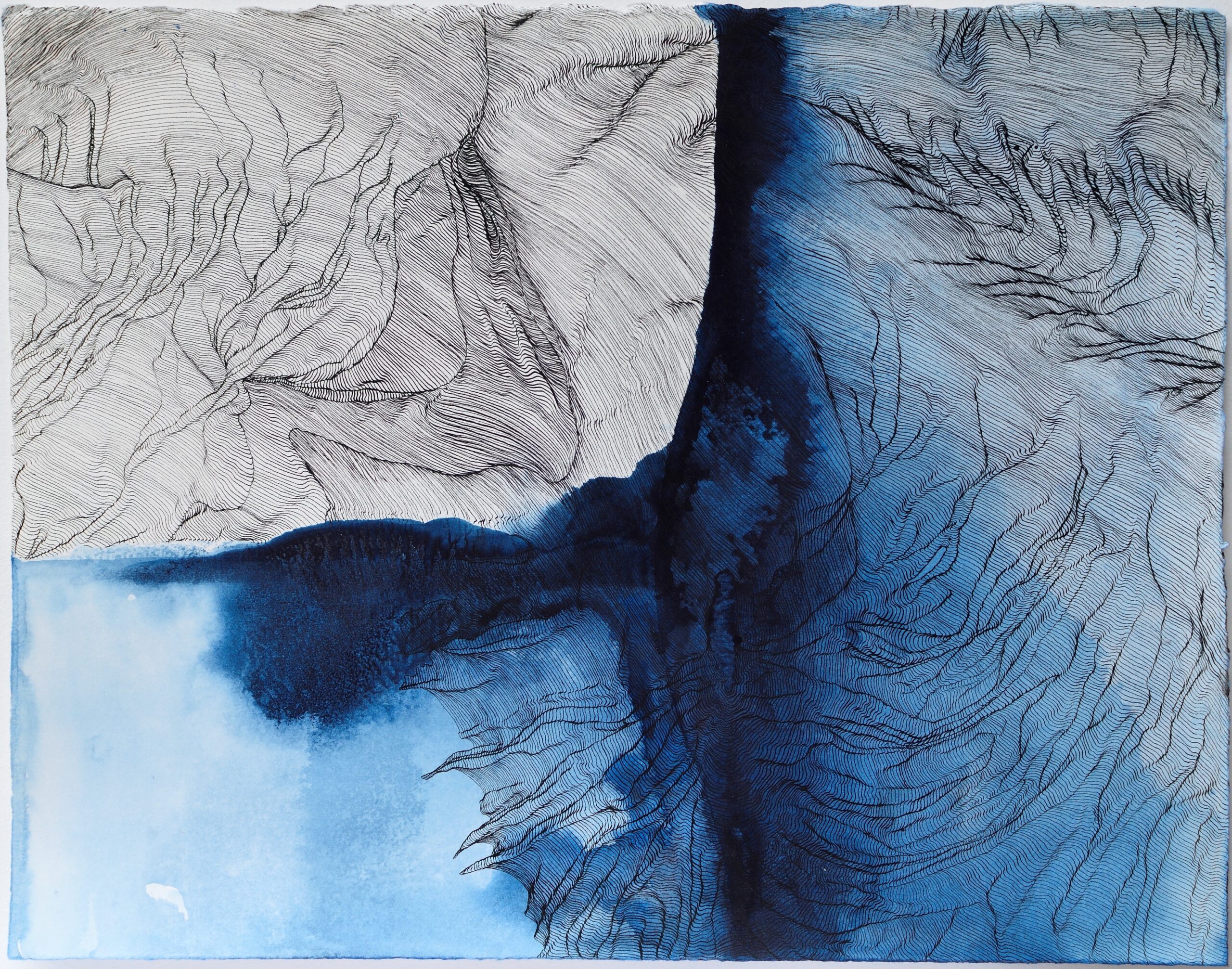
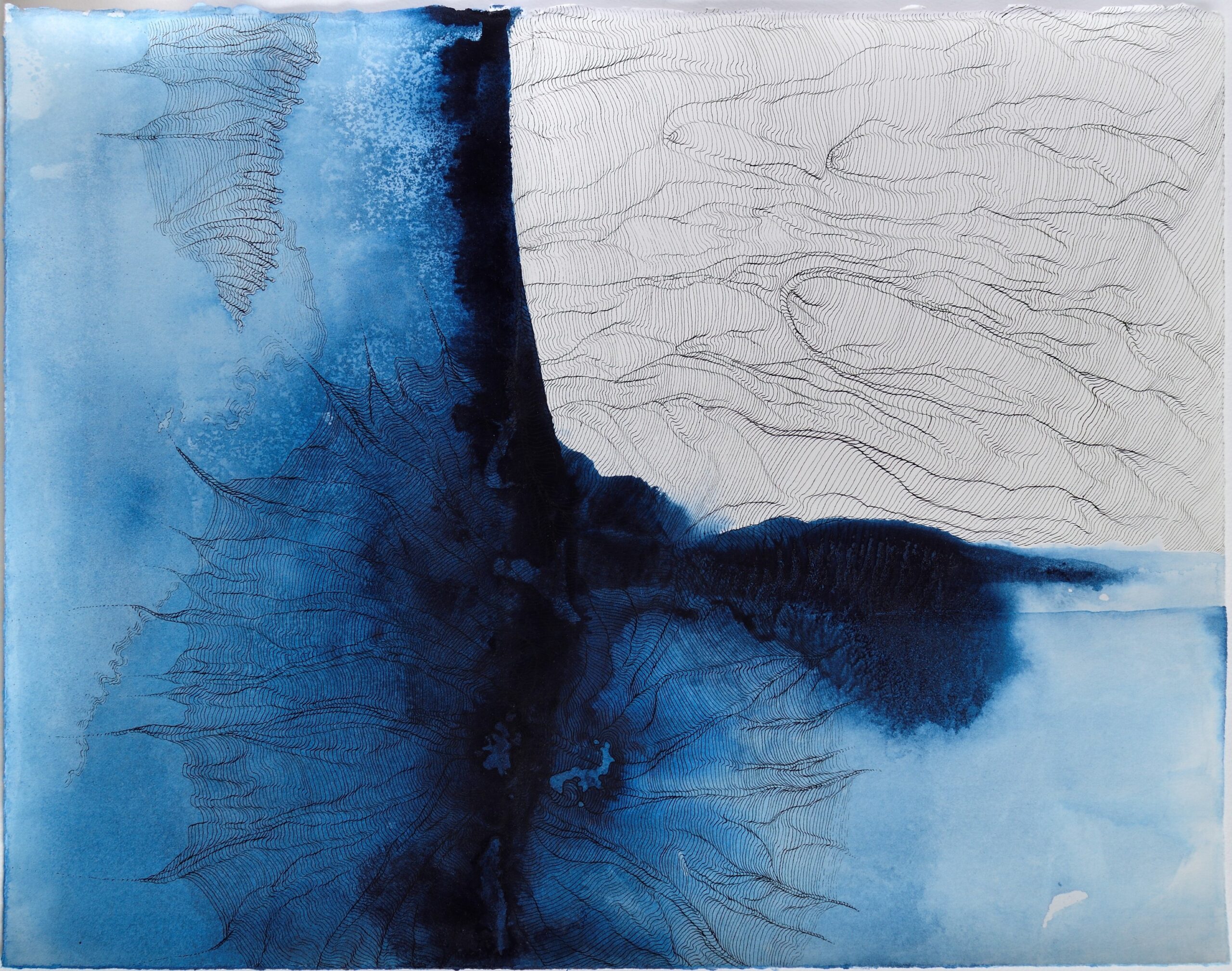
Variable installation configuration.
The work is modular. The panels can be rotated or re-sequenced to form different topographical narratives
.
The pair represents a geographic strait and a human throat. In Turkish, these two things share the same name: boğaz.
The diptych makes the somatic friction of silence visible. By framing the throat as a narrowed geographic strait, the work illustrates the pent-up tension of hidden truths and understands the purposeful use of the voice no longer as an abstract concept but as a physical necessity for liberation.
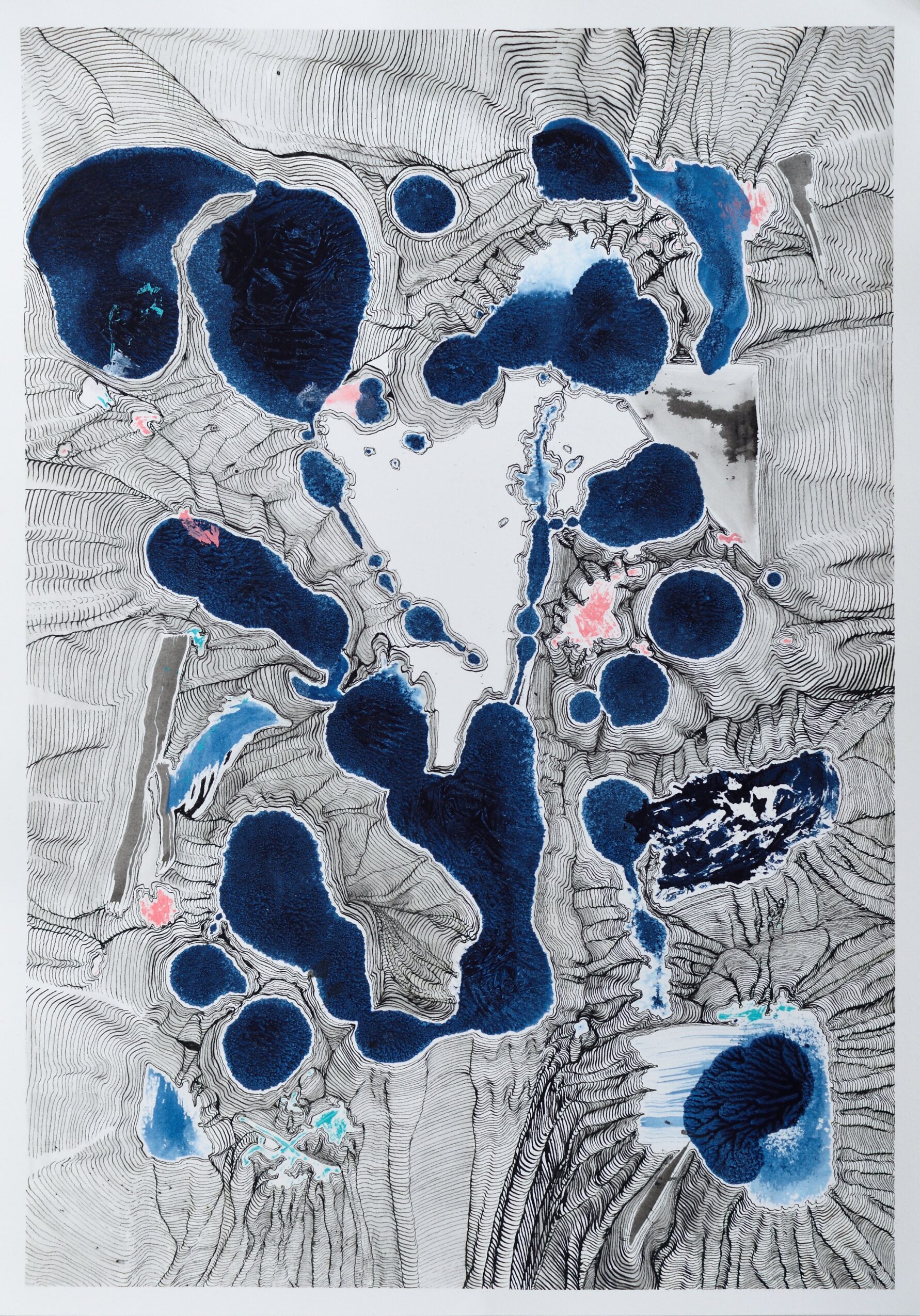
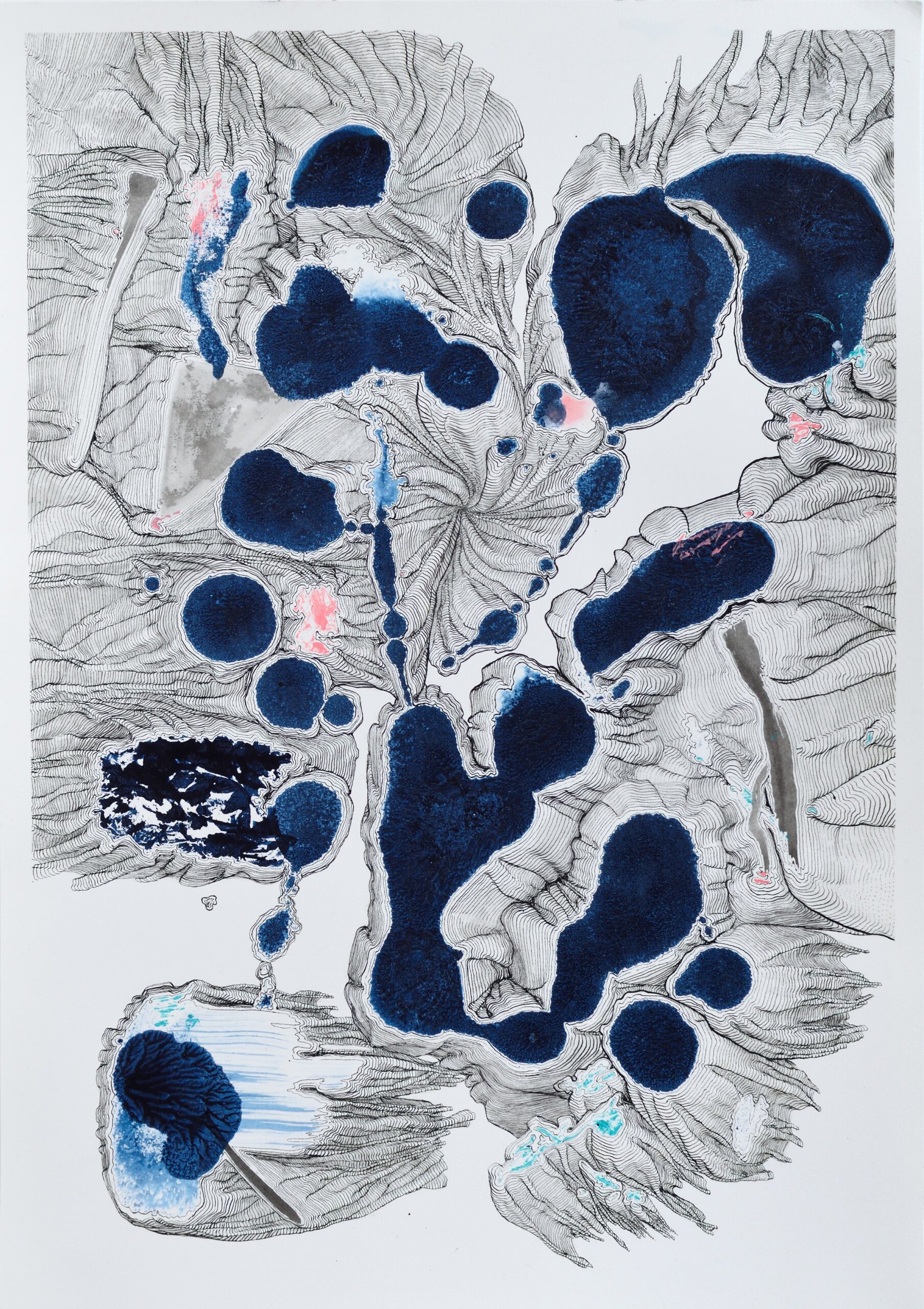
Contourol, 2025
Acrylic and Indian ink on cotton rag
Diptych, 29.7 x 42 cm (each)
In this pair, the line structures remain comparable, but the negative space is distributed differently. Minor deviations reorganize the overall image, altering the balance, density, and visual movement across the surface.
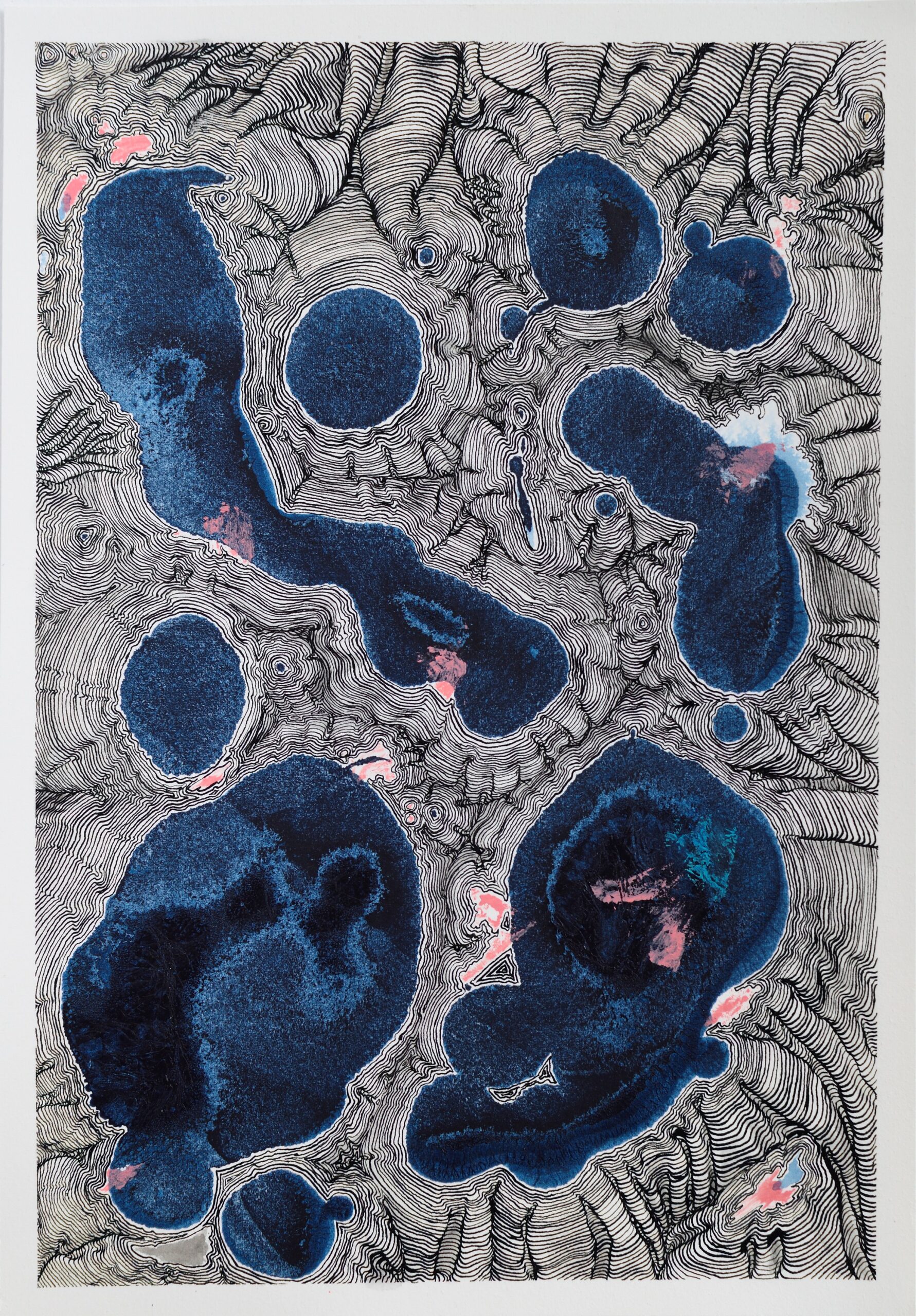
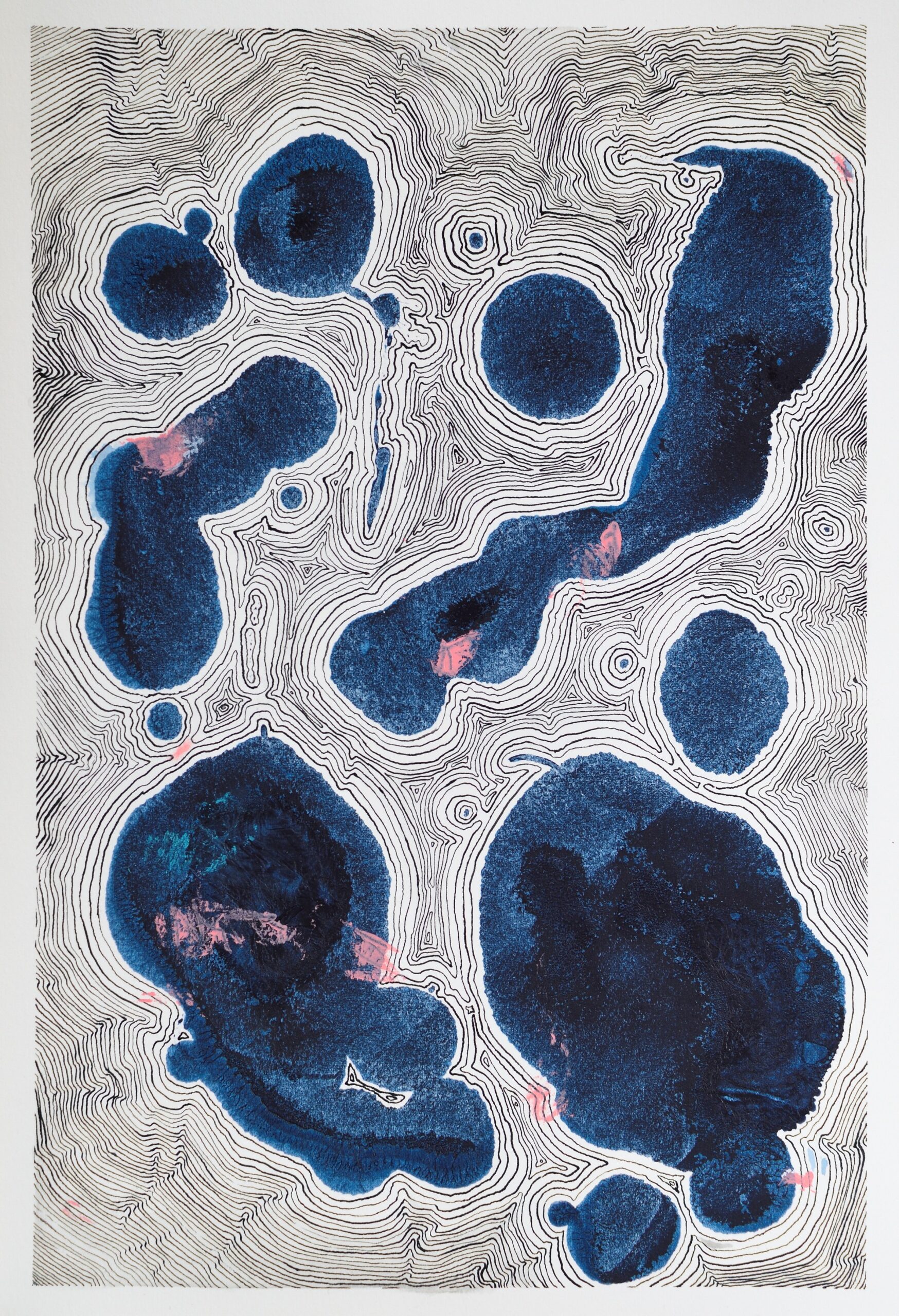
Twins No.1, 2025
Acrylic and Indian ink on cotton rag
Diptych, 20.5 x 29.4 cm (each)
Both fields emerge from the same dominant ink stain and an extensive network of lines, but their structures develop differently. One field becomes dense and compressed, with little room to breathe. The other organizes itself into a more open, structured system that allows for intervals of expansion. This visualizes how identical origins produce fundamentally different spatial and physical realities.
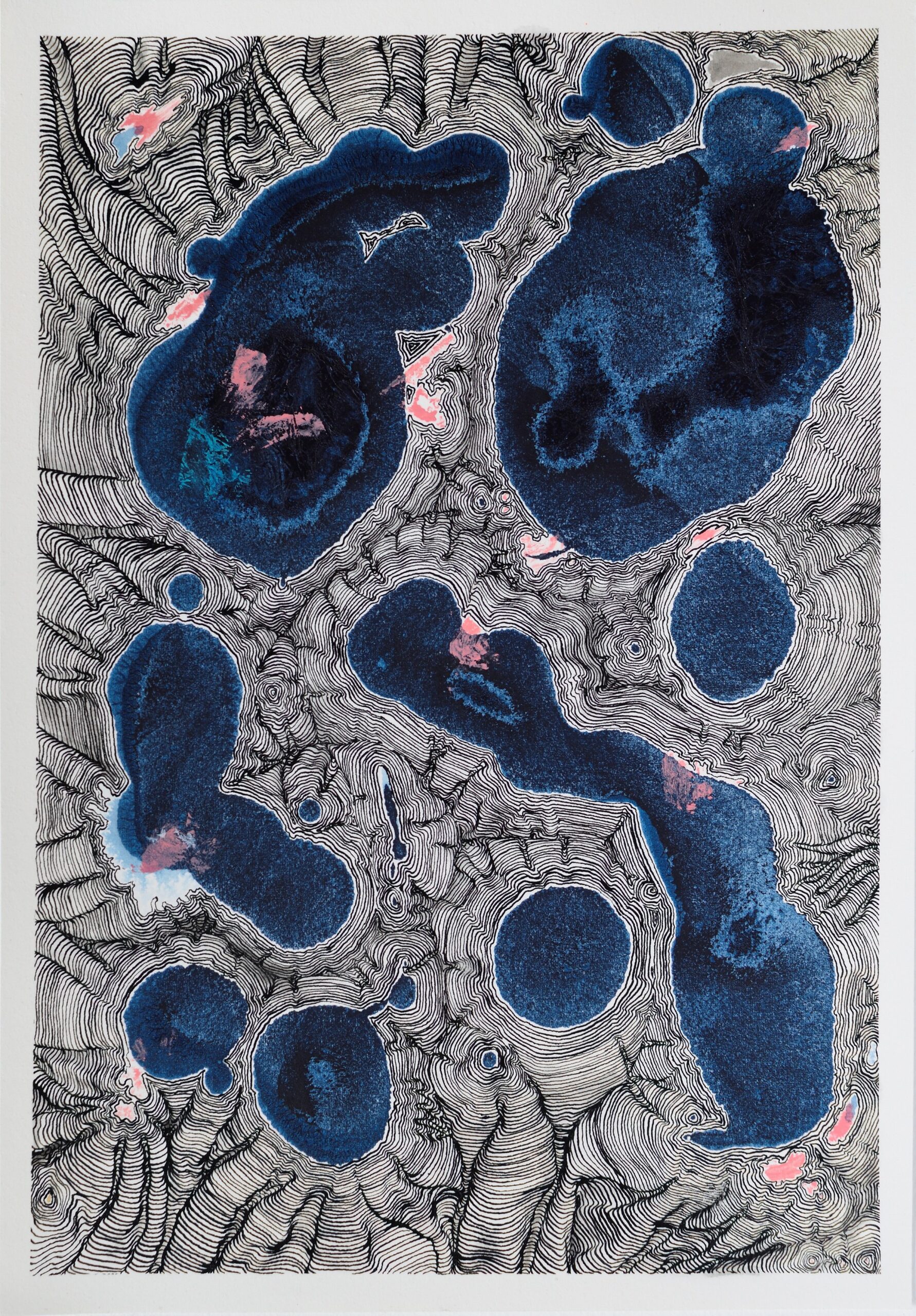
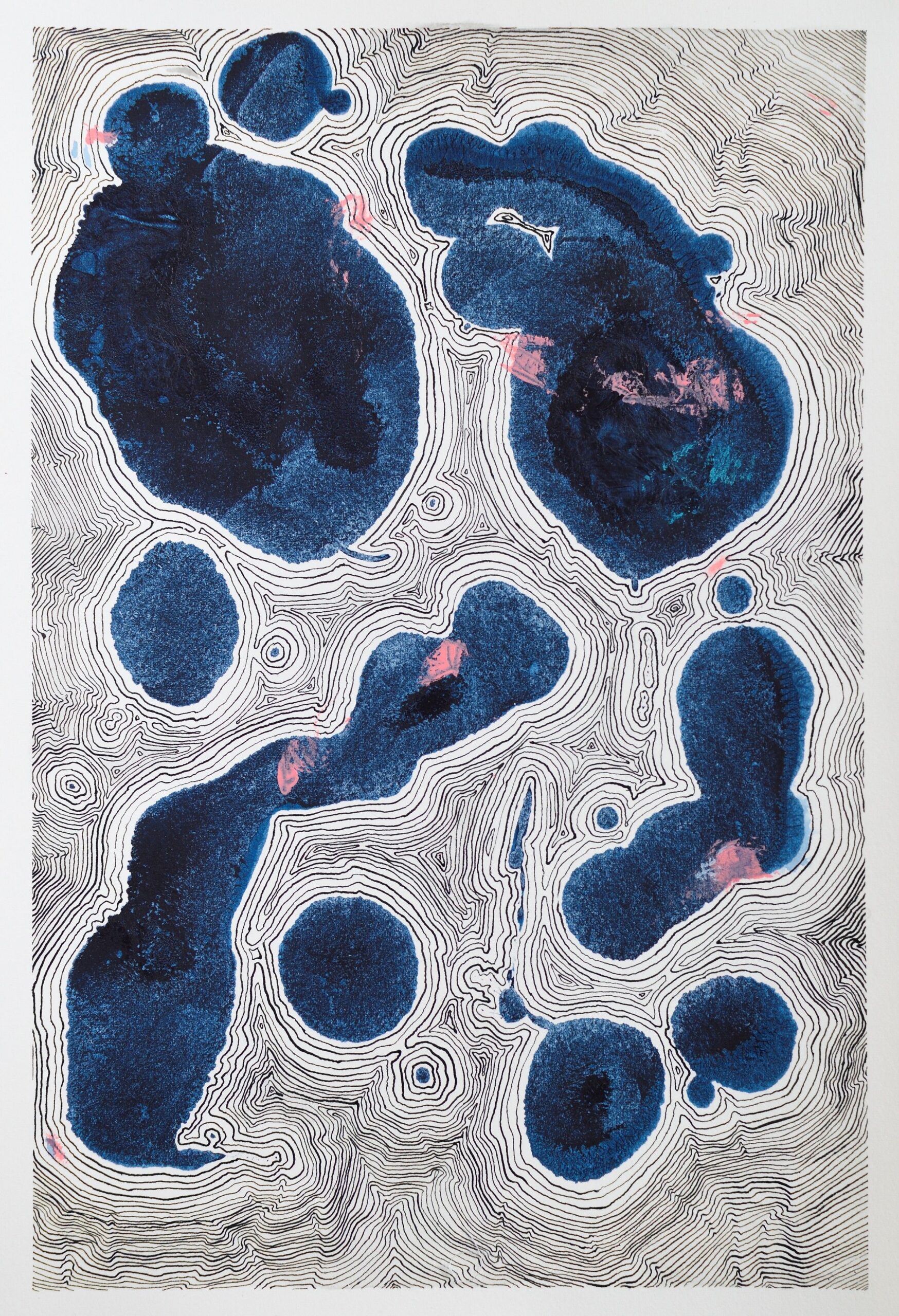
Variable installation configuration
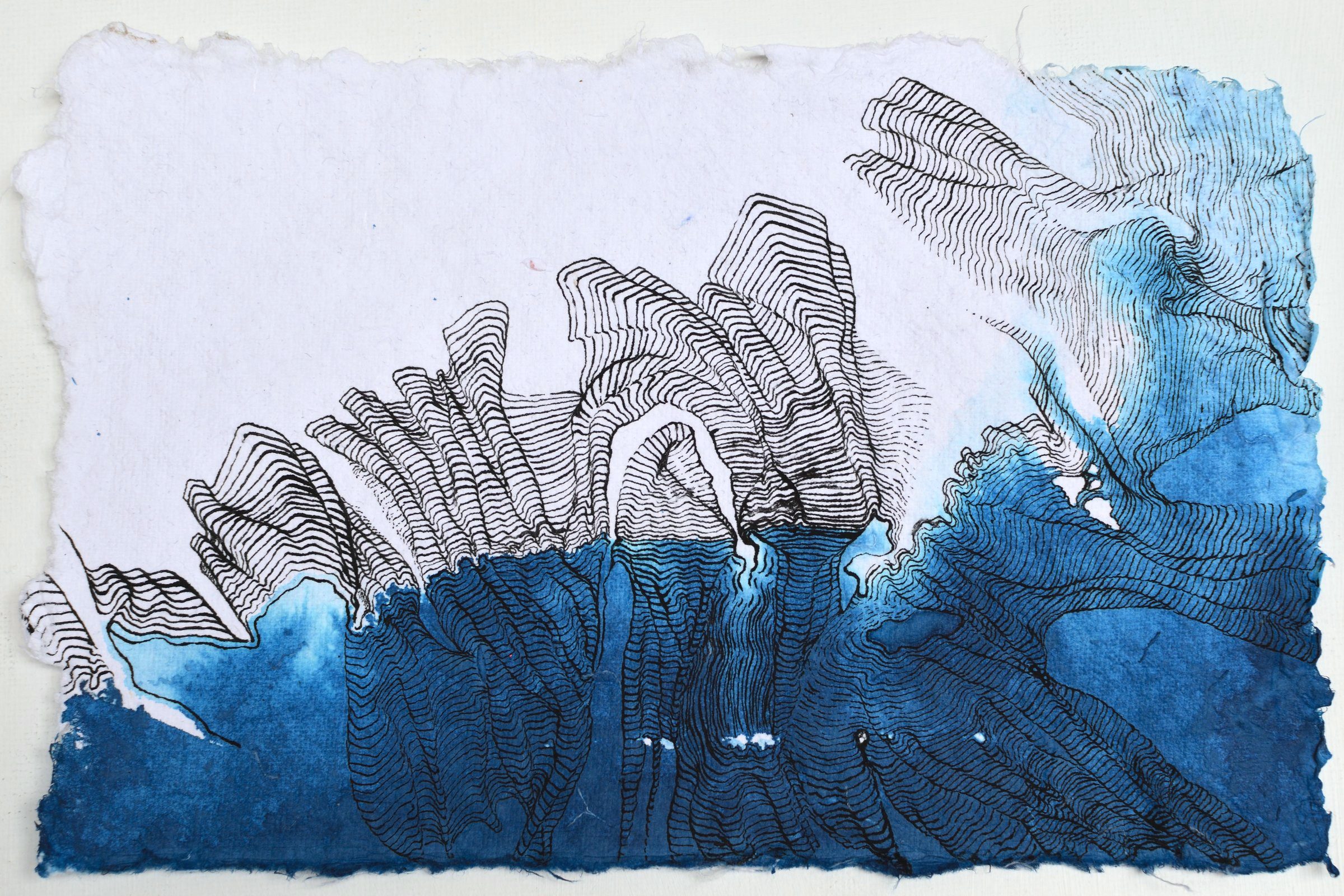
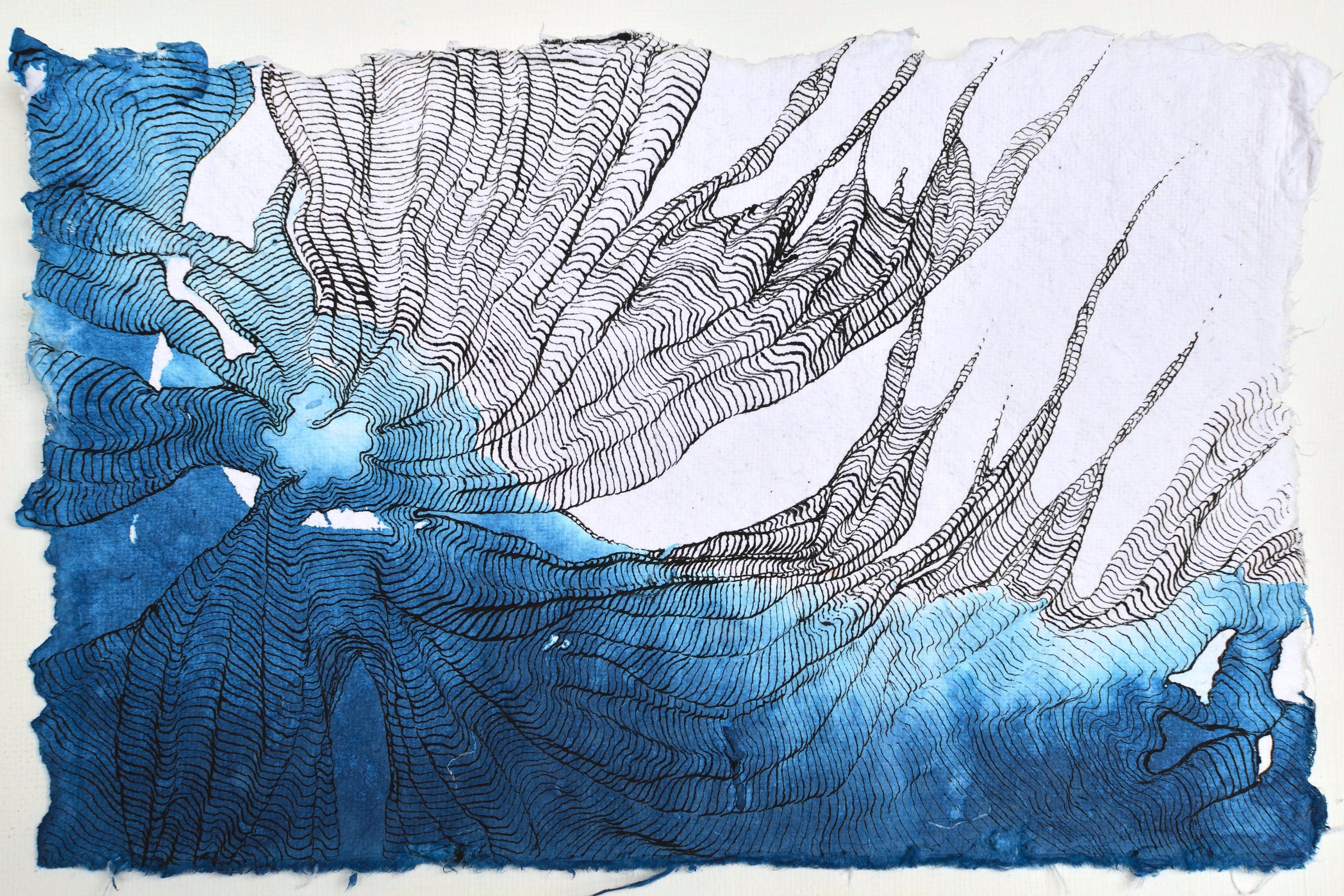
Coral, 2026
Liquid watercolor and Indian ink on handmade recycled cotton rag
Diptych, 9 x 12 cm (each)
The title, Coral, references the organic structure of the image. To mirror the growth of a reef, the piece was created in a single five-hour “continuum” without interruption. The two halves share an identical material composition, having been torn from the same original sheet of paper.
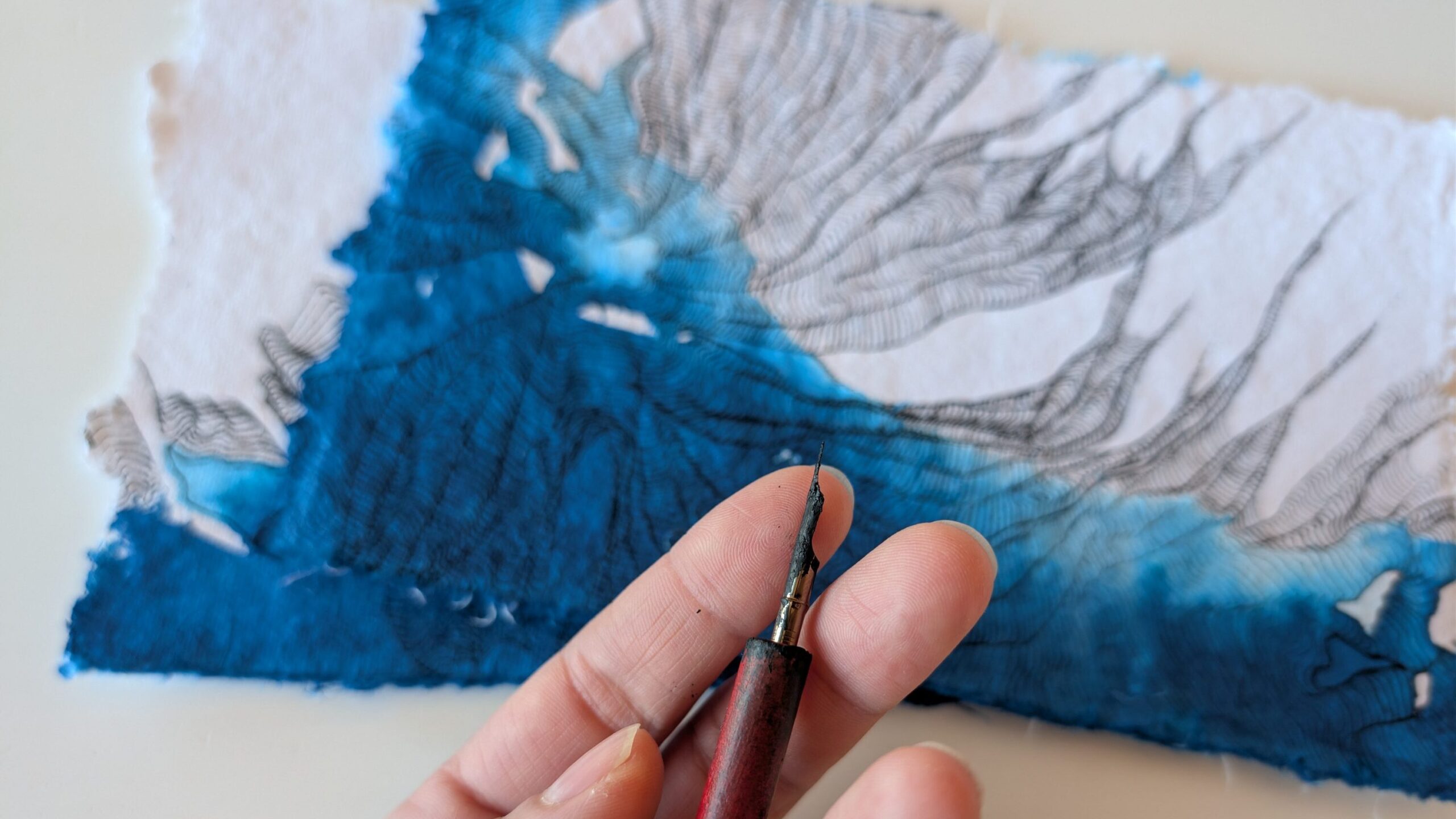
Instrument: A single nib used for the 5-hour drawing session on Coral.
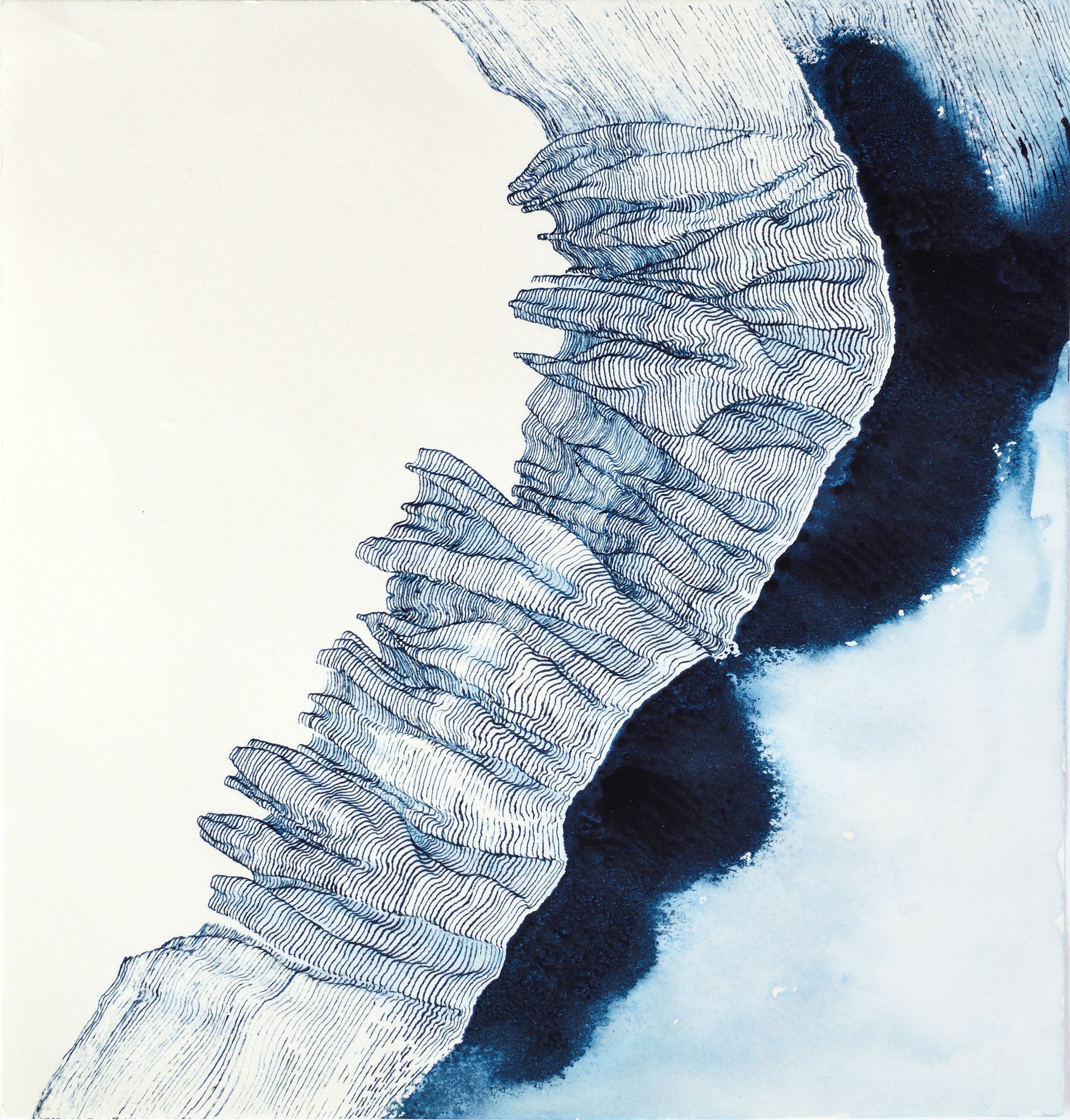
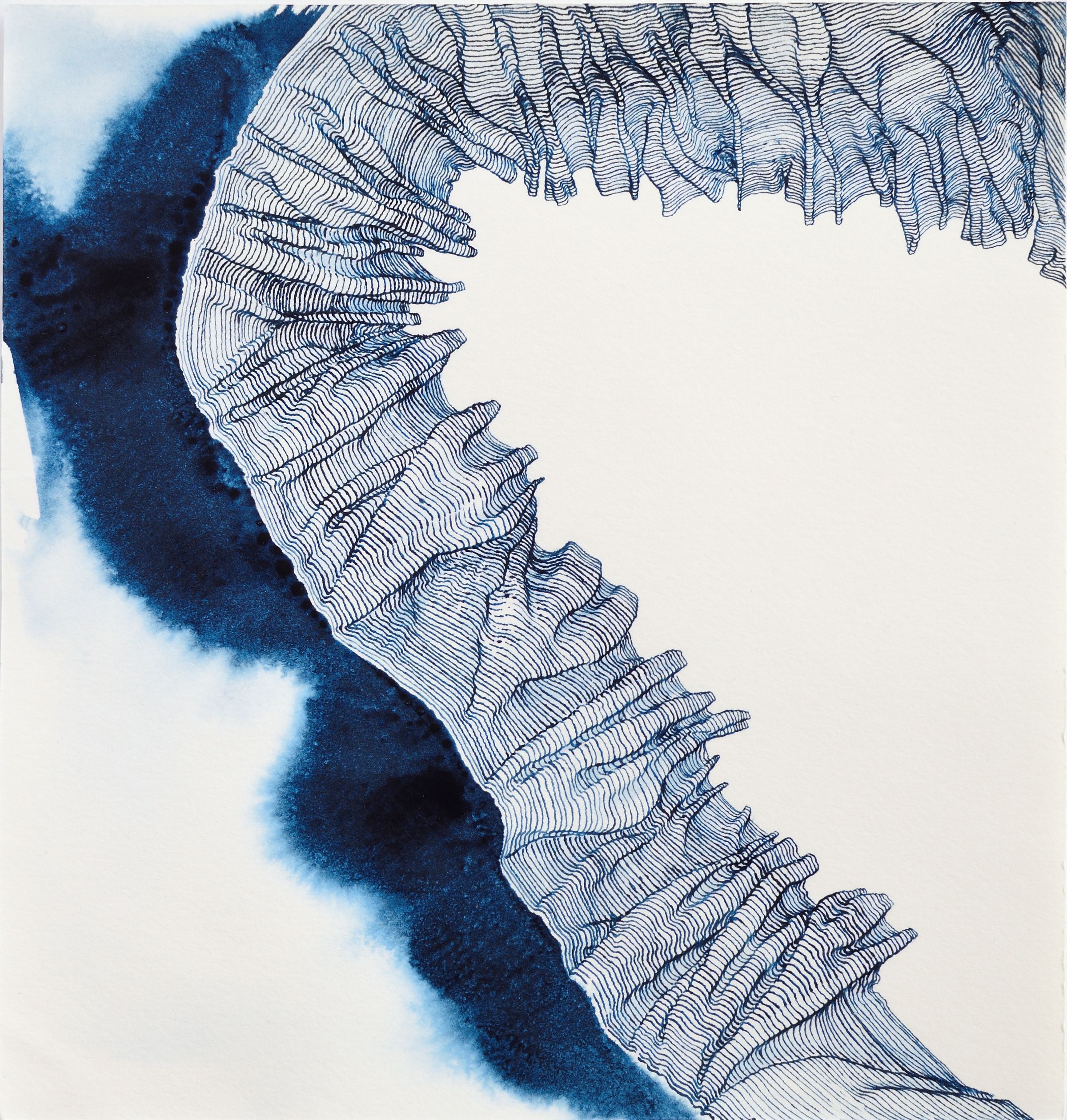
Indigo Study, 2025
Acrylic ink on a removed journal page
Diptych, 18.7 x 19.4 cm (each)
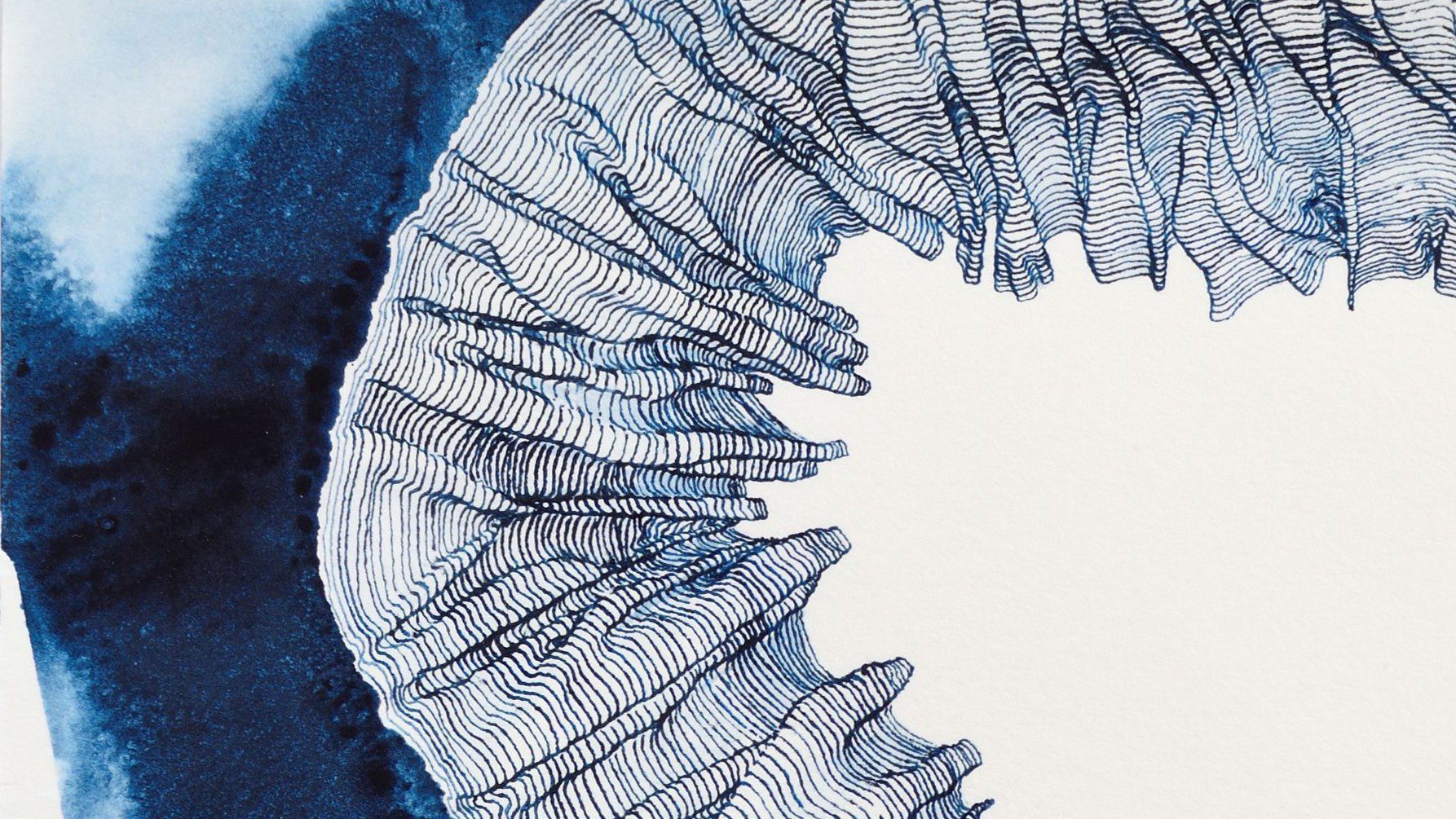
Close-up on Indigo Study B
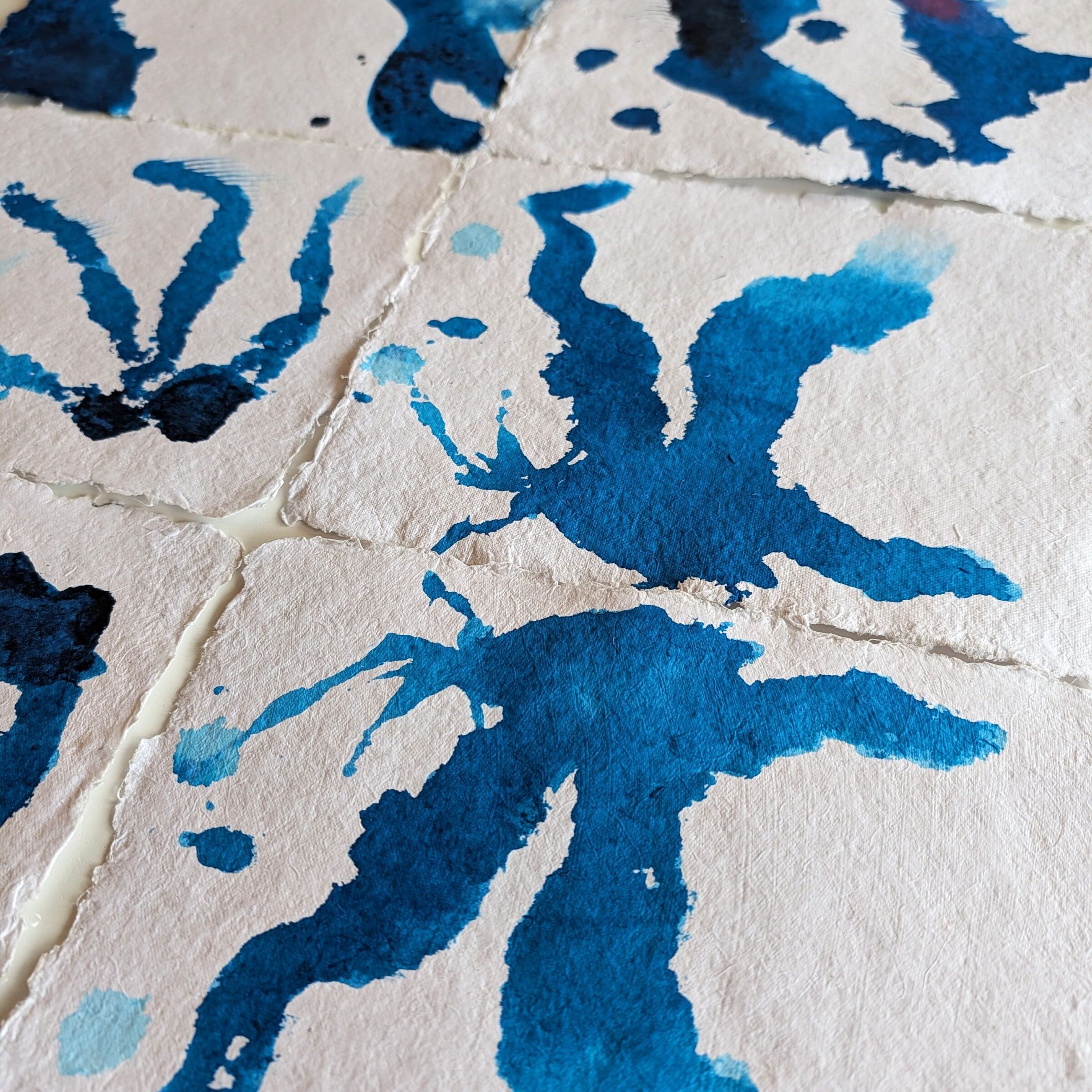
Work in Progress