Welcome to my open studio. This notebook captures the ongoing development of my work, pairing finished series with the early sketches and reflections that shaped them.
While the digital archives are currently being built, new data is on the way.
Études, 2026: Material and technical studies for the Topographies series
Études is a series of standalone ink drawings that isolate and examine the line systems developed in my twenty-panel Topographies series. Working with India ink, steel nibs, handmade cotton paper, water washes, and charcoal, these studies dismantle the compositional pressure of the multi-panel work. They focus on the line itself: its weight, its response to dilution, and its capacity to accumulate into density or dissolve into tone.
The line functions as an index: a physical trace shaped by the body and its surroundings as much as by the tool. Visually, most of the studies function as topographic fragments. Occasionally, a formation surfaces: the lines tighten into a circular motif, and the topographic field yields an identifiable structure. Conceptually, these works register the full spectrum of the line’s behaviour, from the irreducible fragment to the moment of formal emergence.
Each sheet is a self-contained duration: one drawing, one sitting, one record.
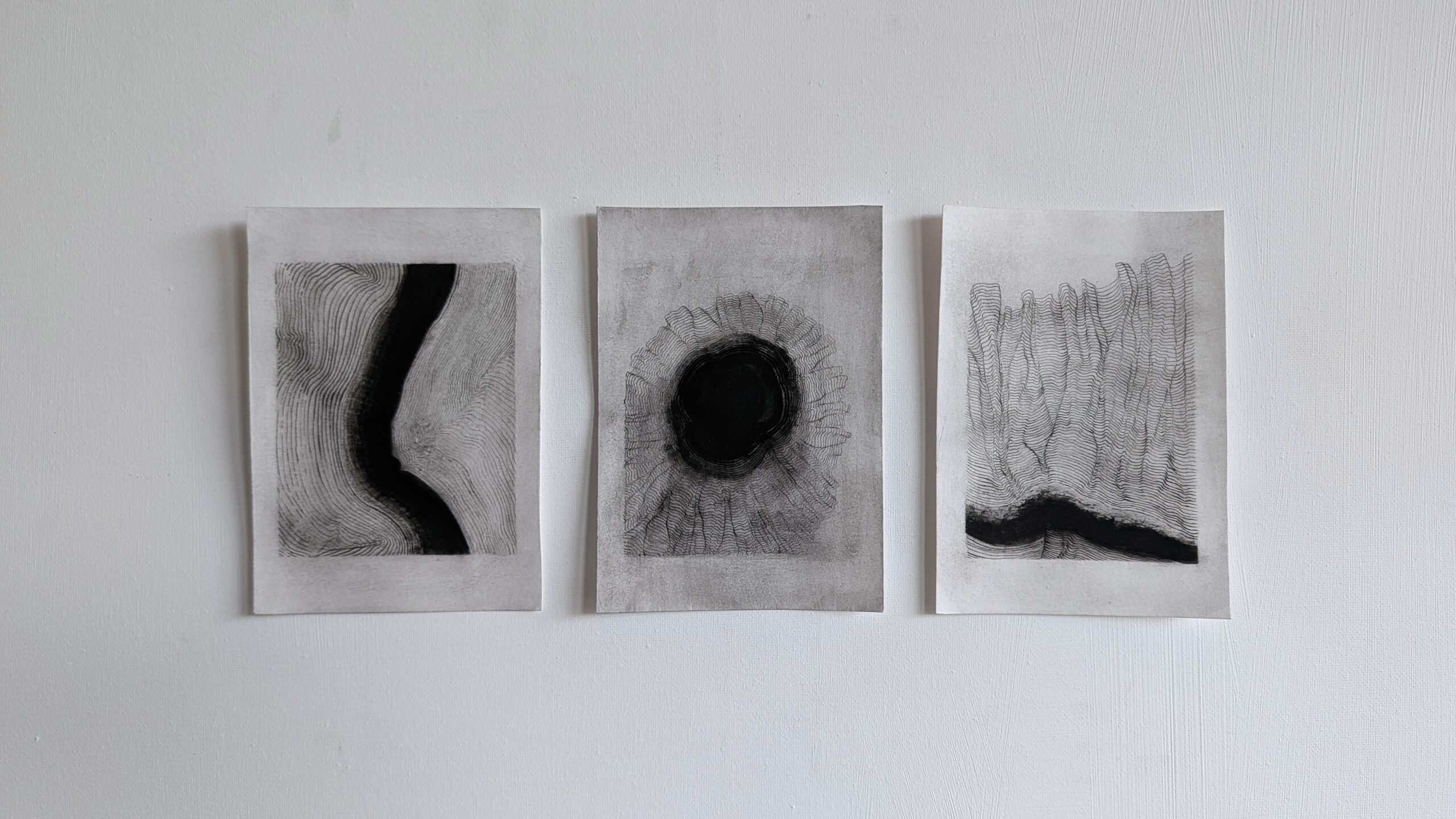
A formation (in the middle), and topographies belonging to it (left, right), all drawn with ink and dip pen with a hard nib.
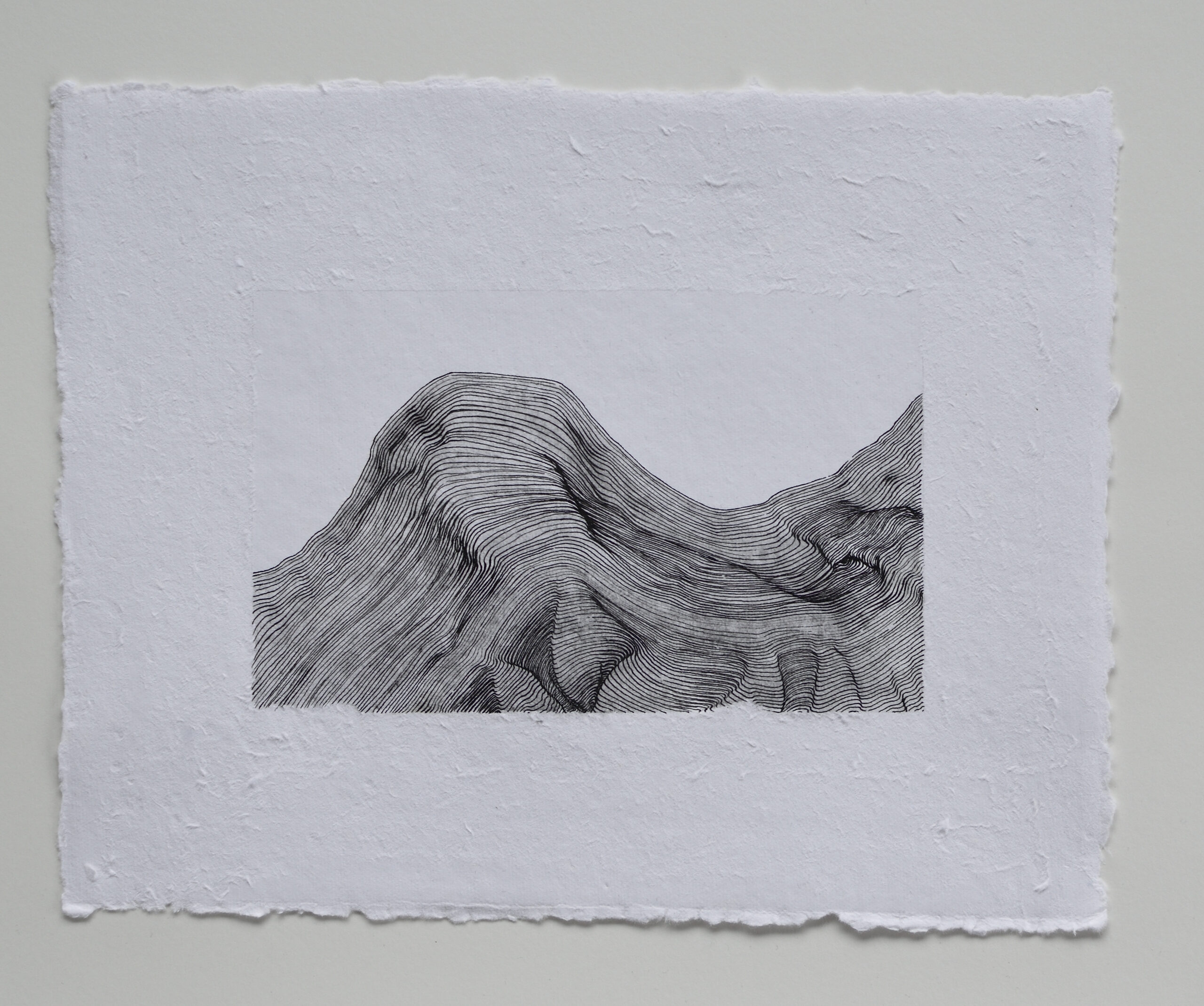
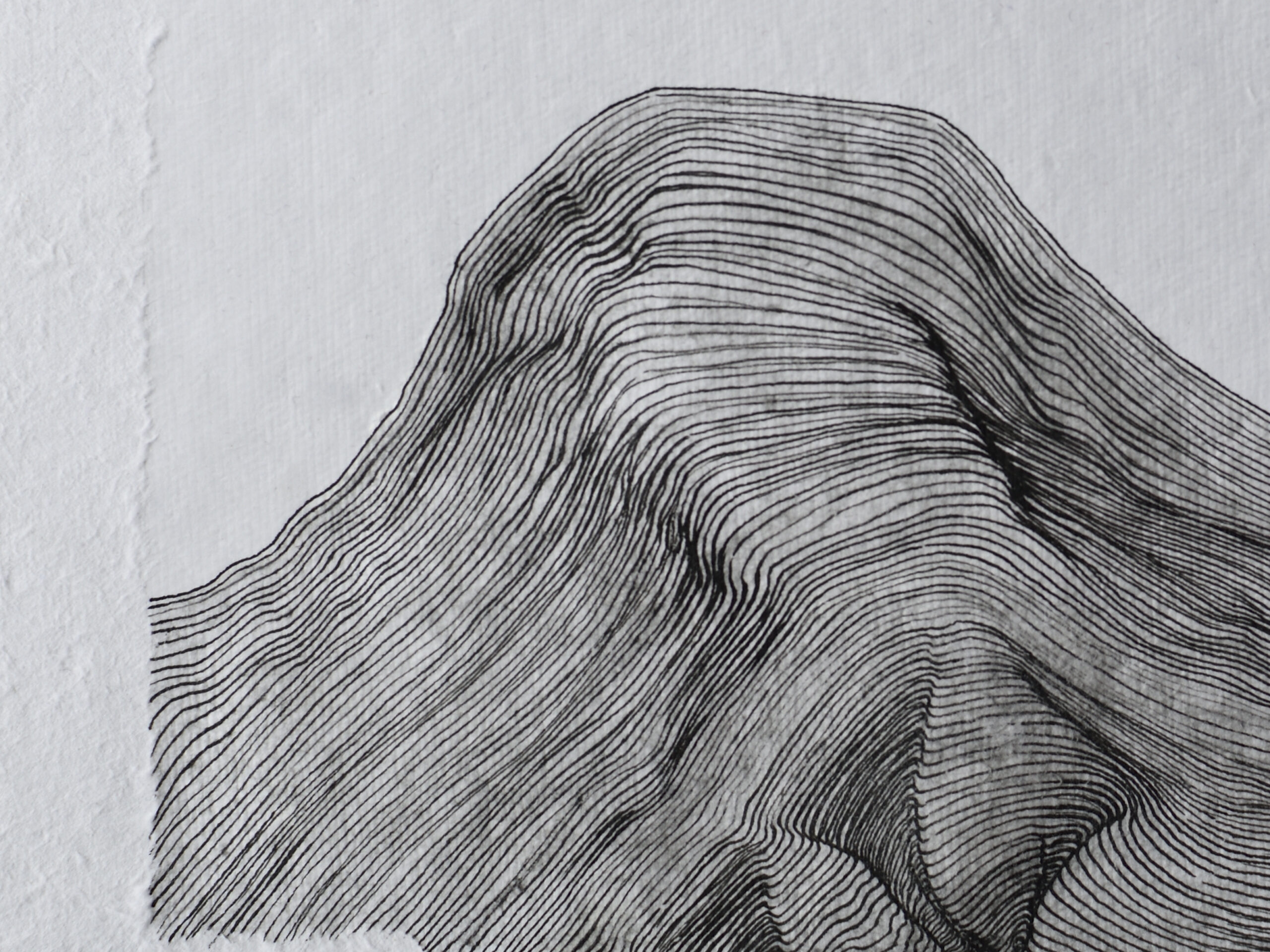
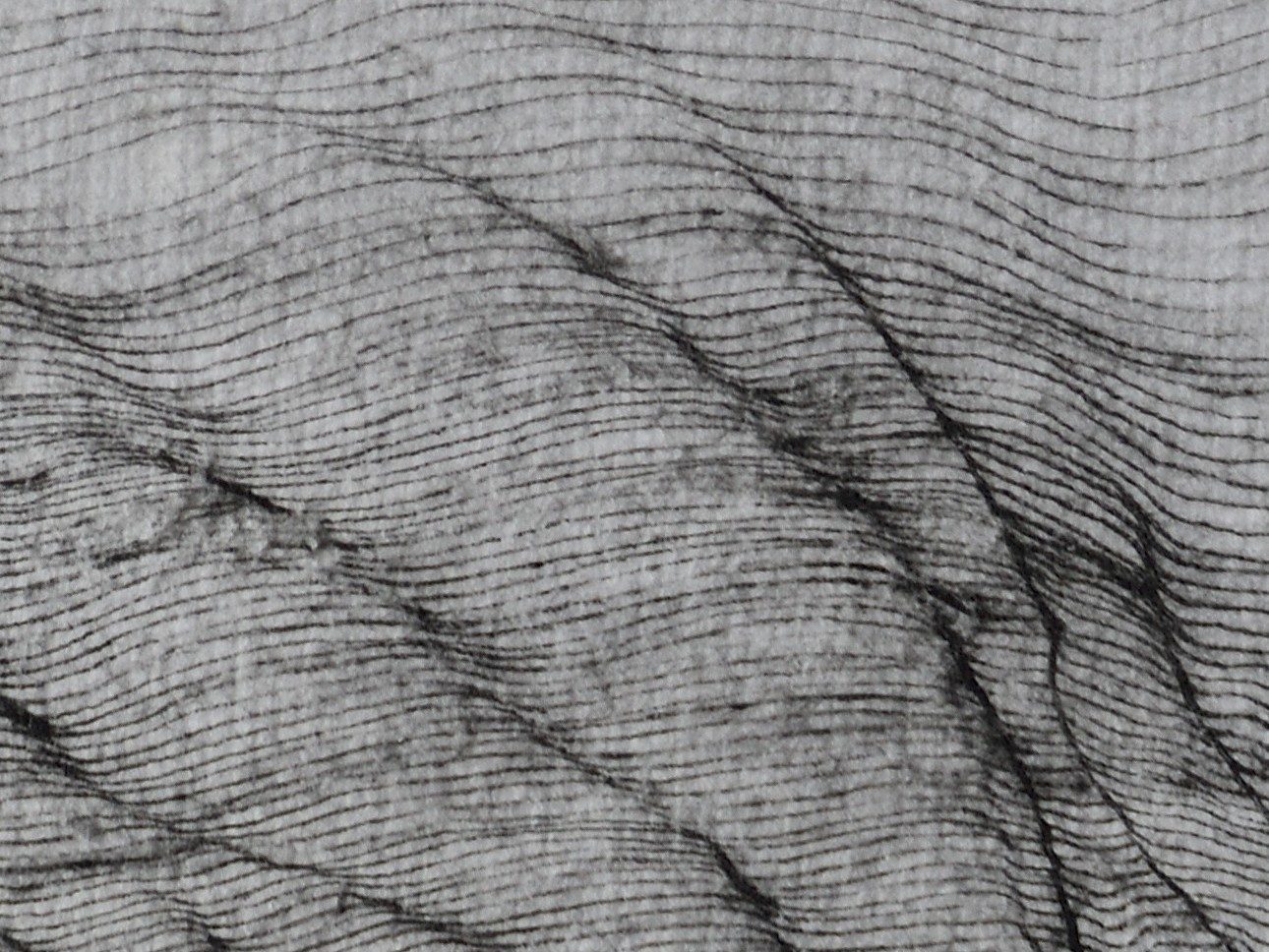
Topography | Strata | 223280
Ink on handmade cotton paper
ca. 21.5 x 28 cm
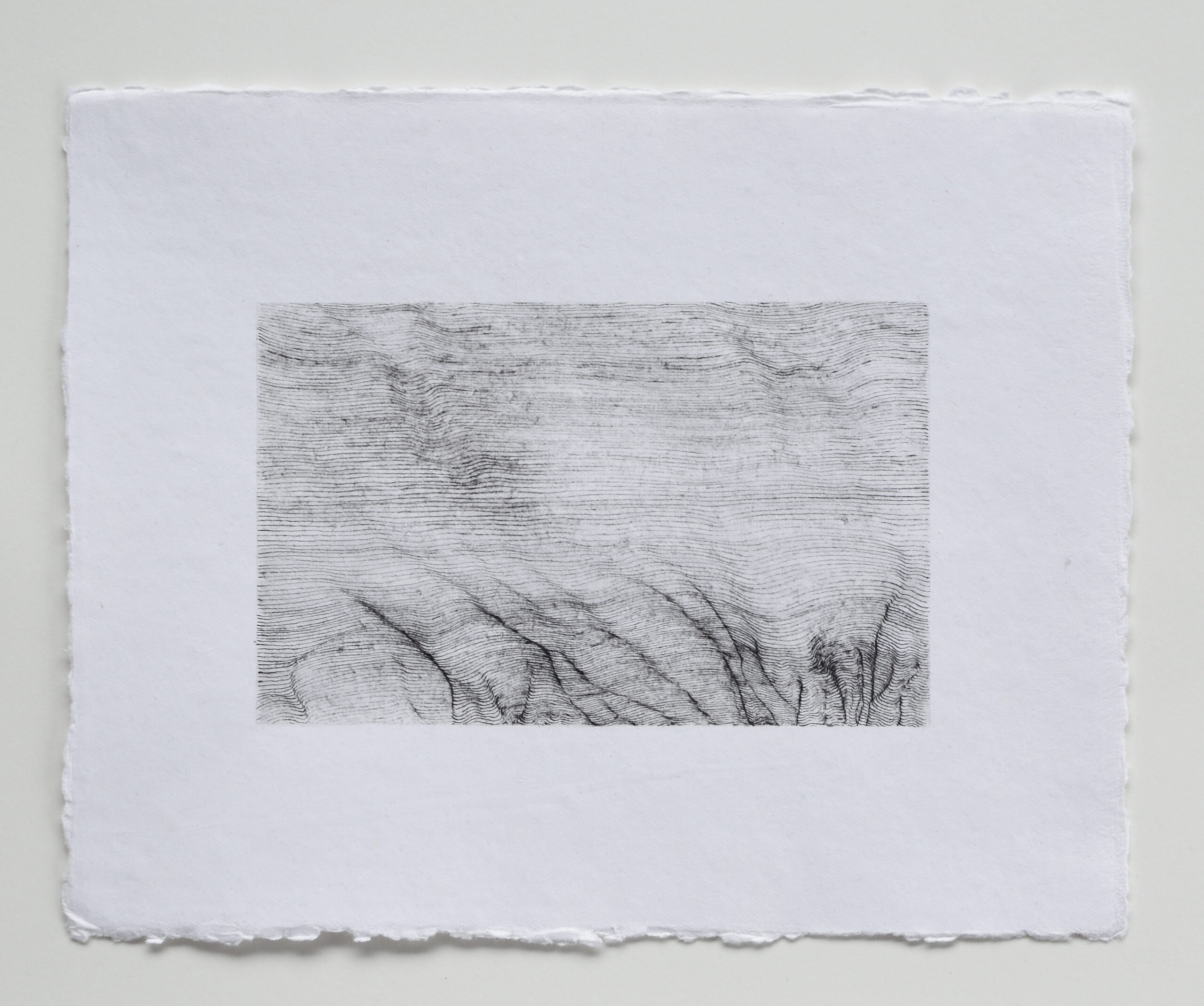
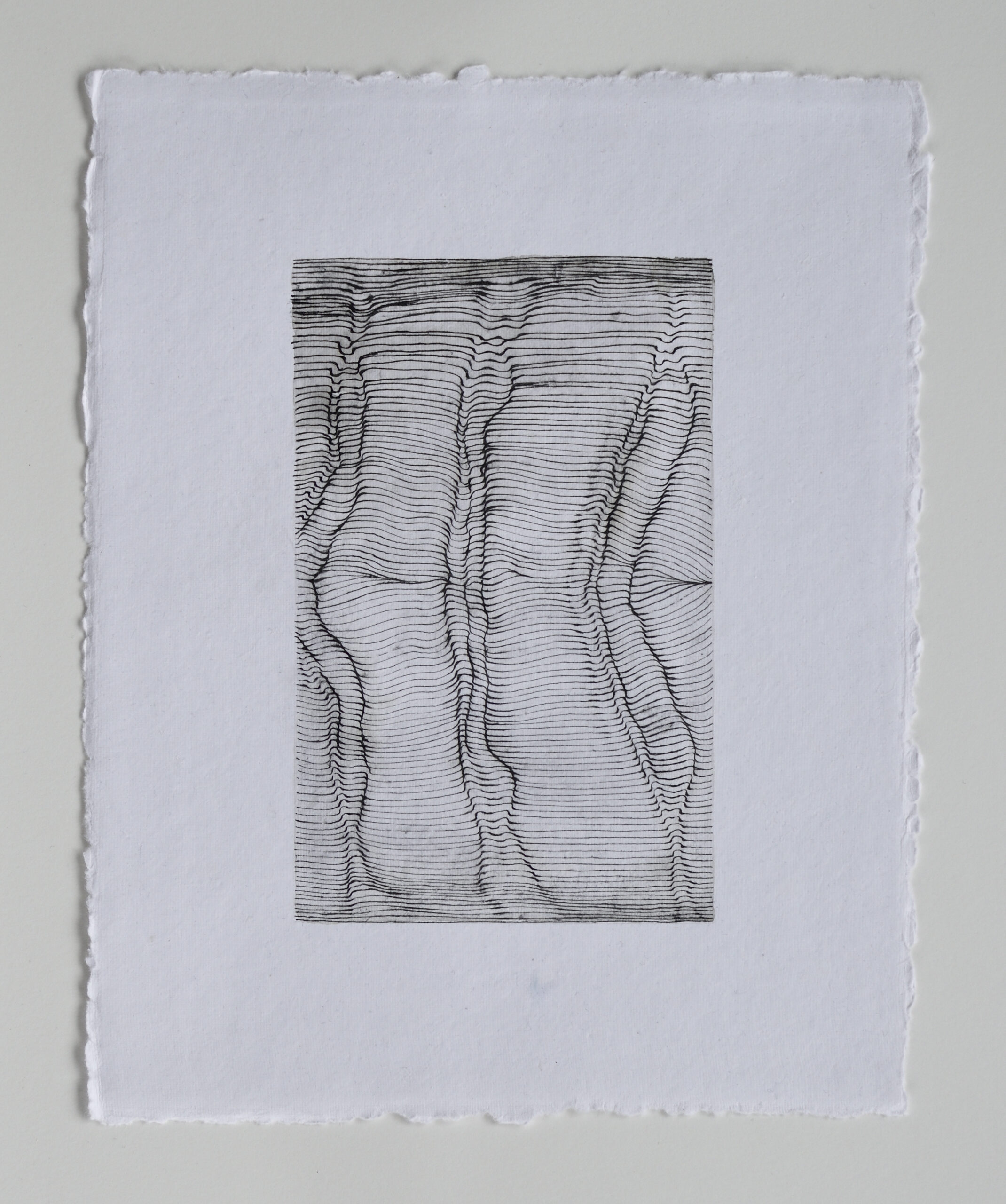
Topography | Container | 227282
Ink on handmade cotton paper
ca. 21.5 x 28 cm
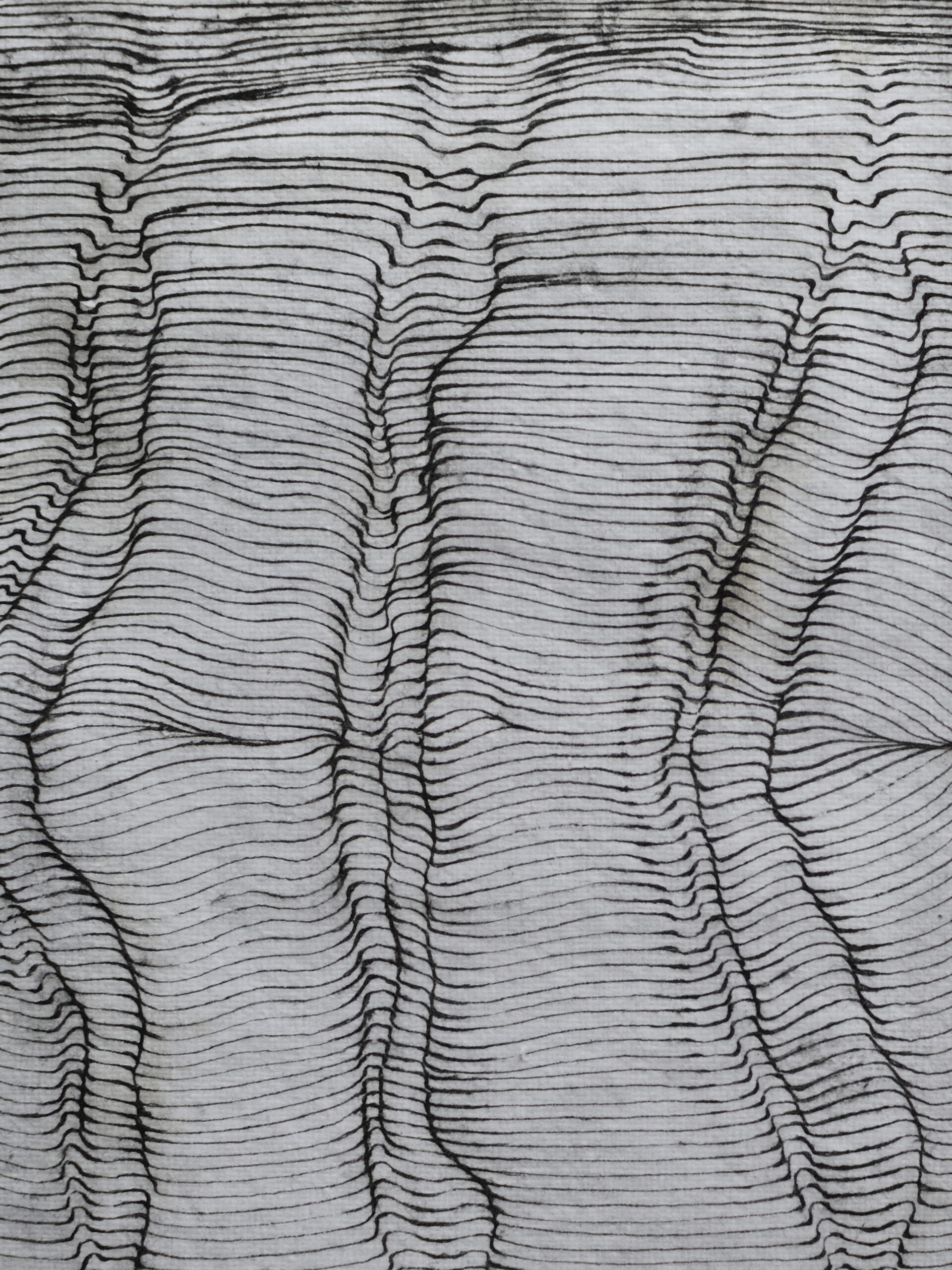
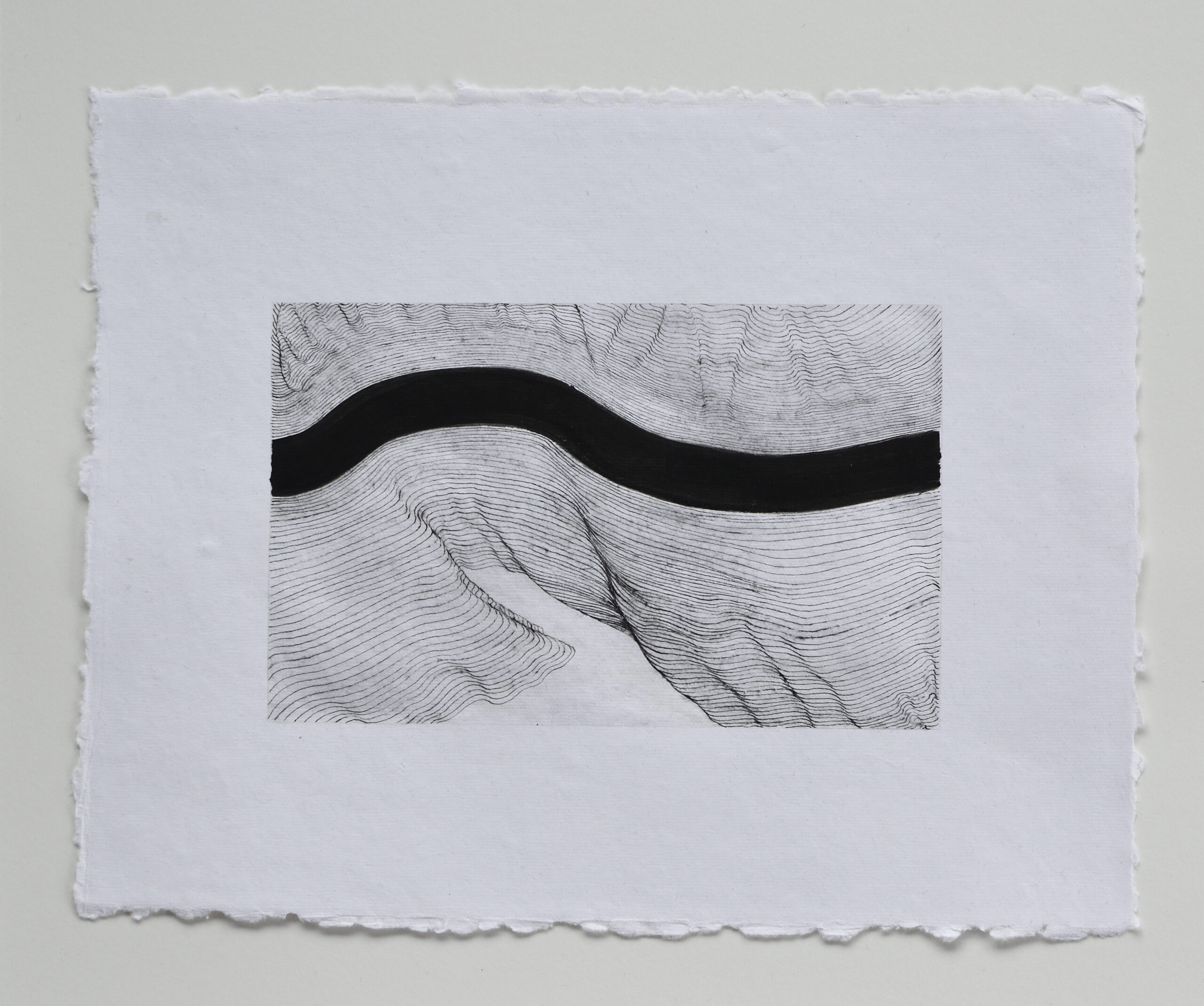
Topography | Mirror | 283224
Ink on handmade cotton paper
ca. 28 x 21.5 cm
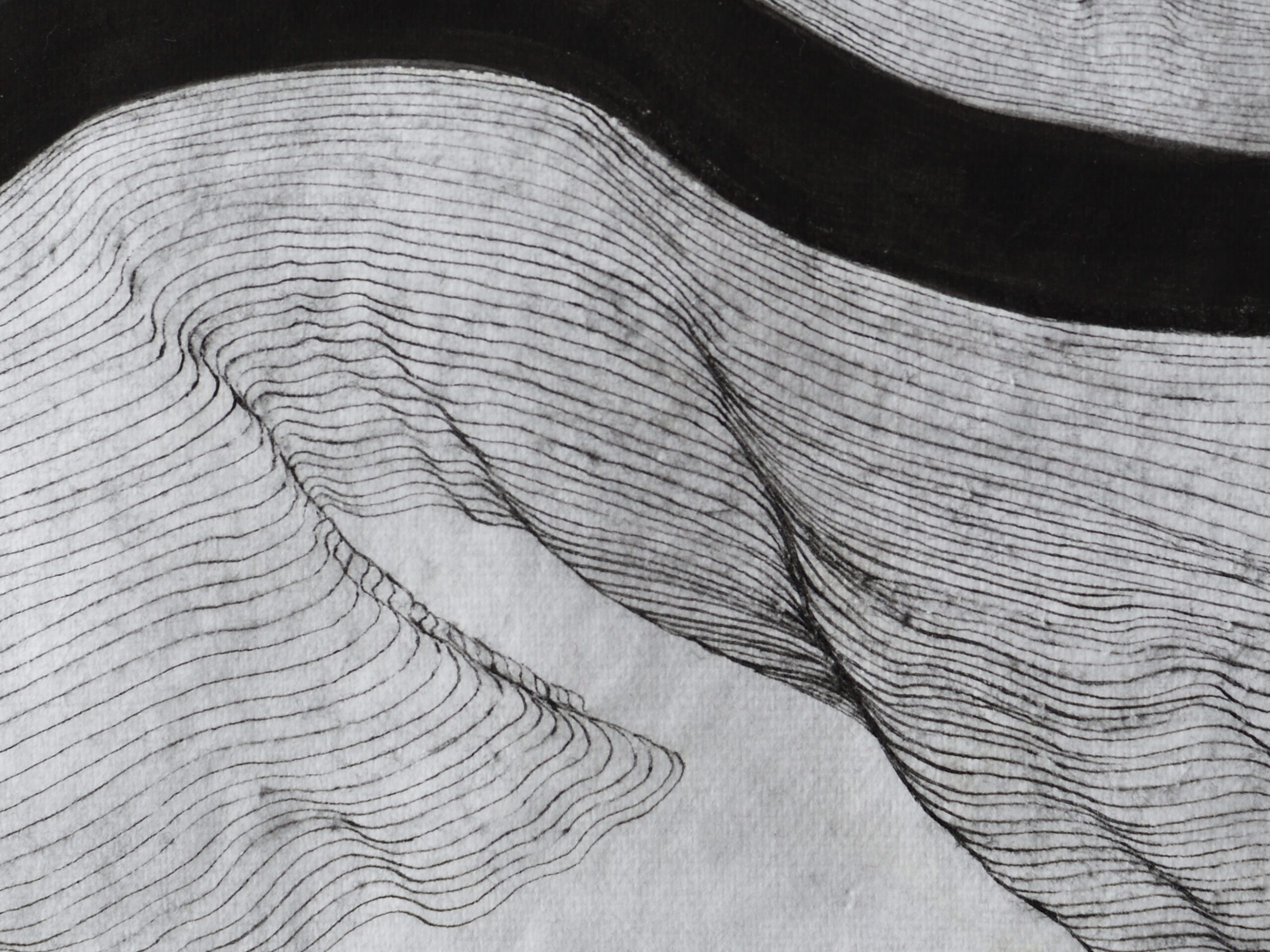
Topography | Kabatepe | 224282
Ink on handmade cotton paper
ca. 21.5 x 28 cm
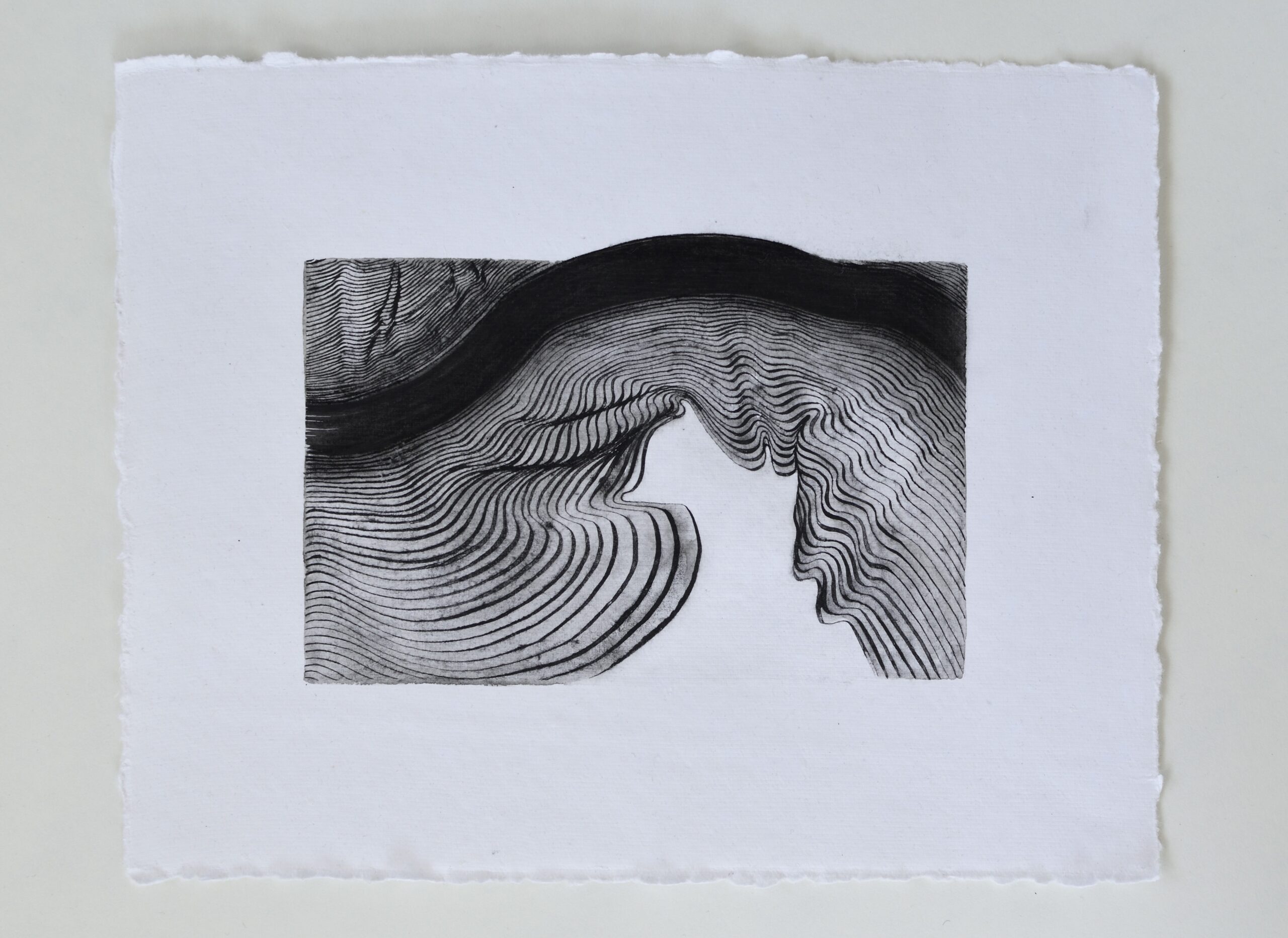
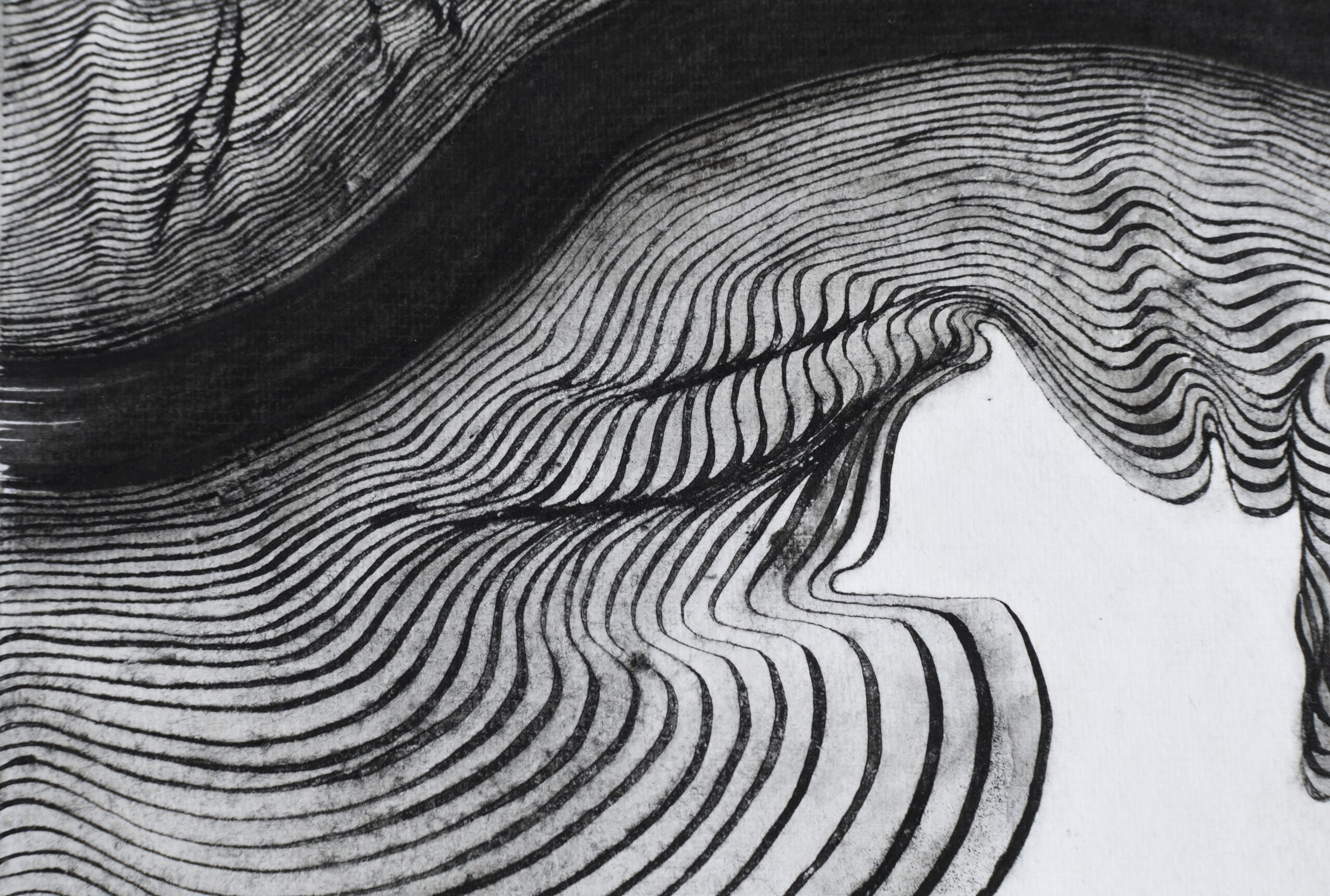
Topography | Kemikli | 222280
Ink and charcoal on handmade cotton paper
ca. 21.5 x 28 cm
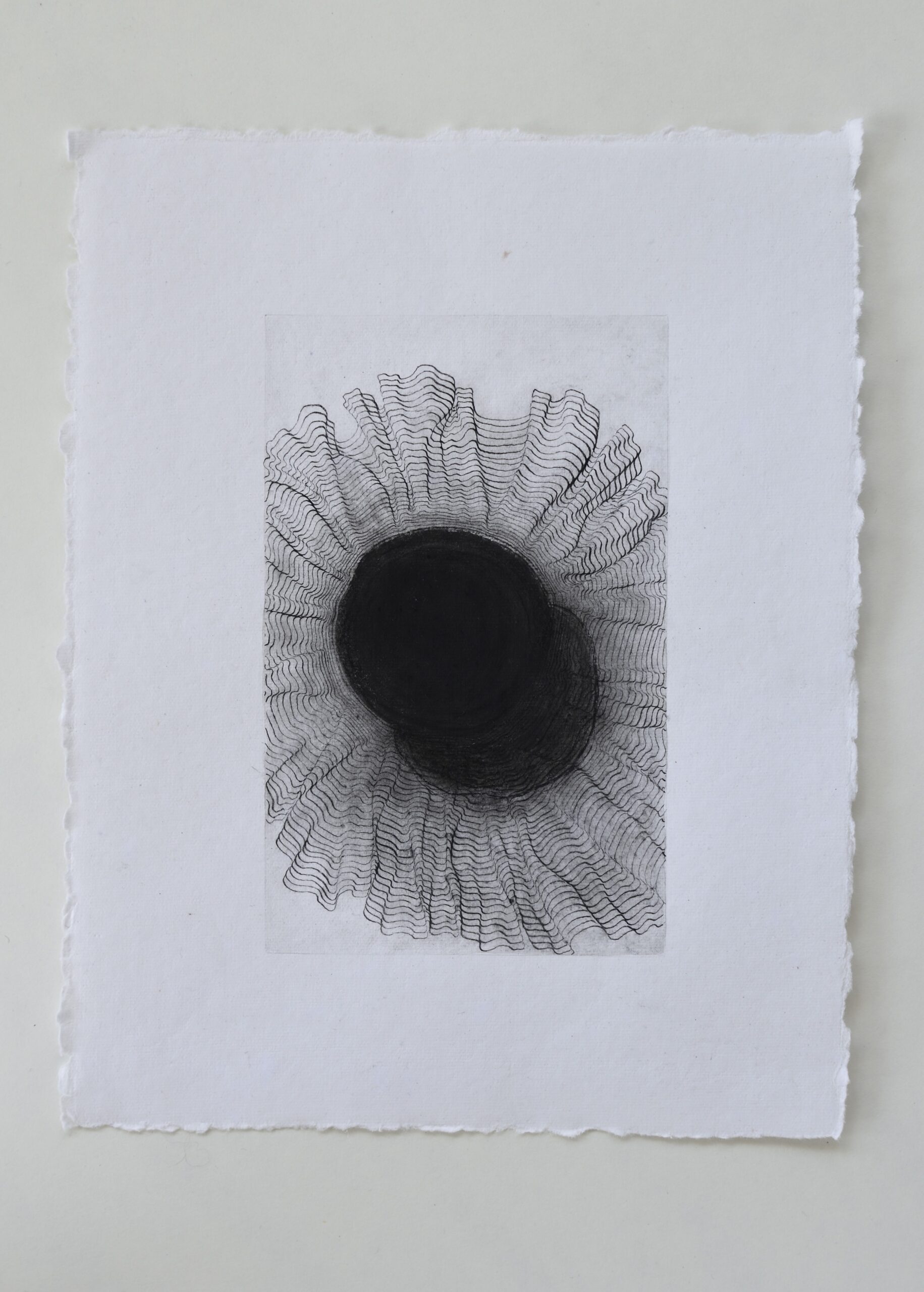
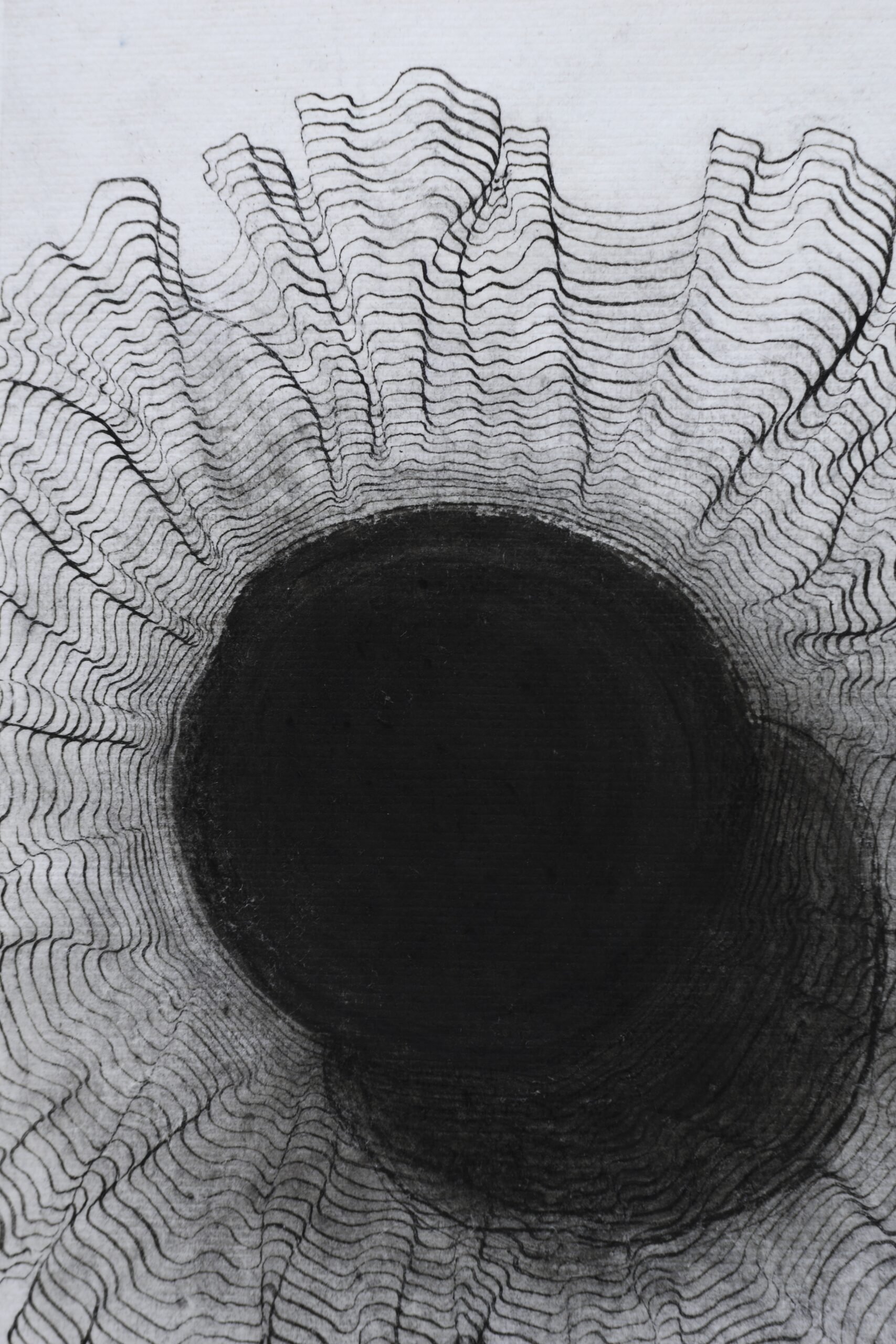
Formation | Echo | 280221
Ink and charcoal on handmade cotton paper
ca. 28 x 21.5 cm
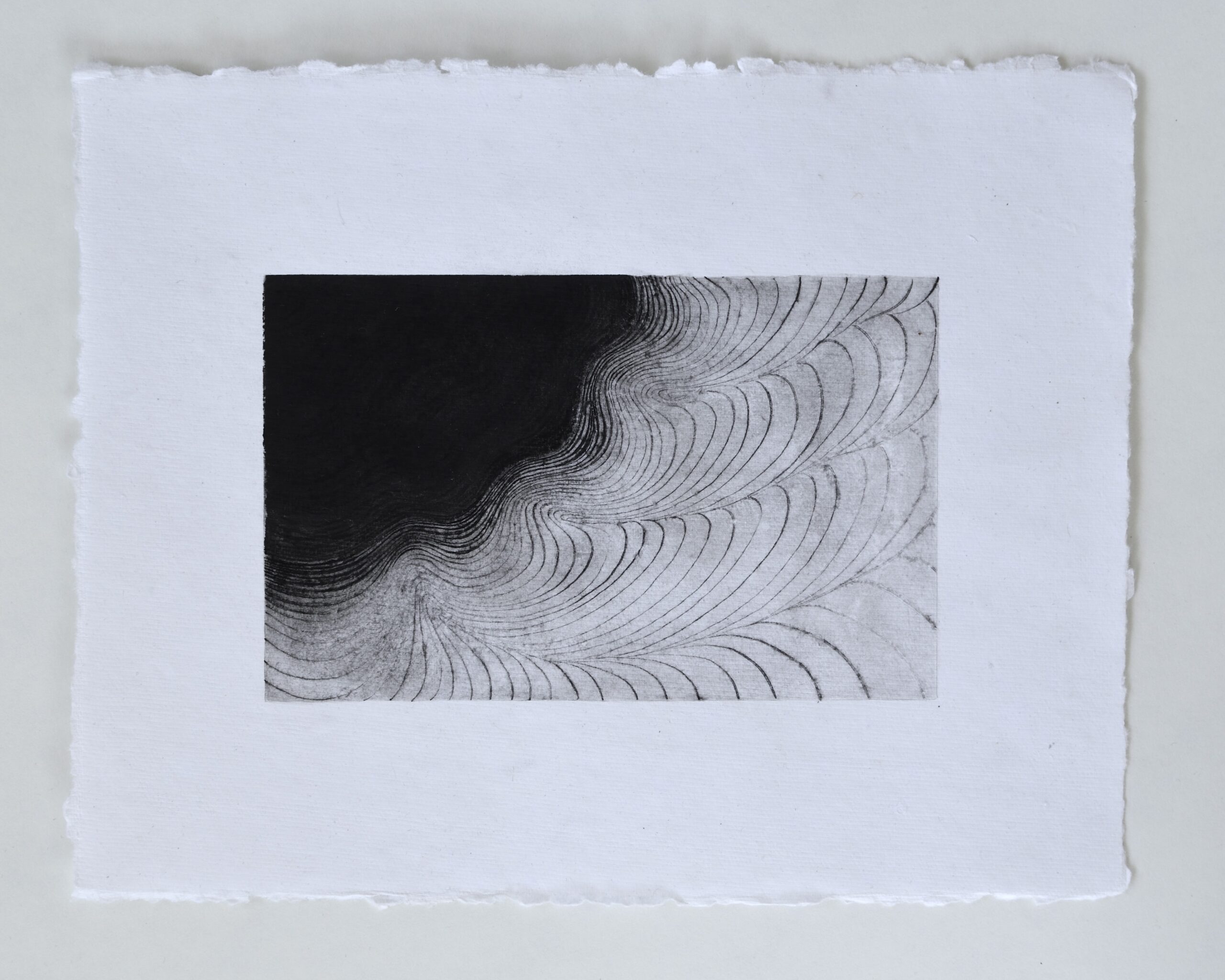
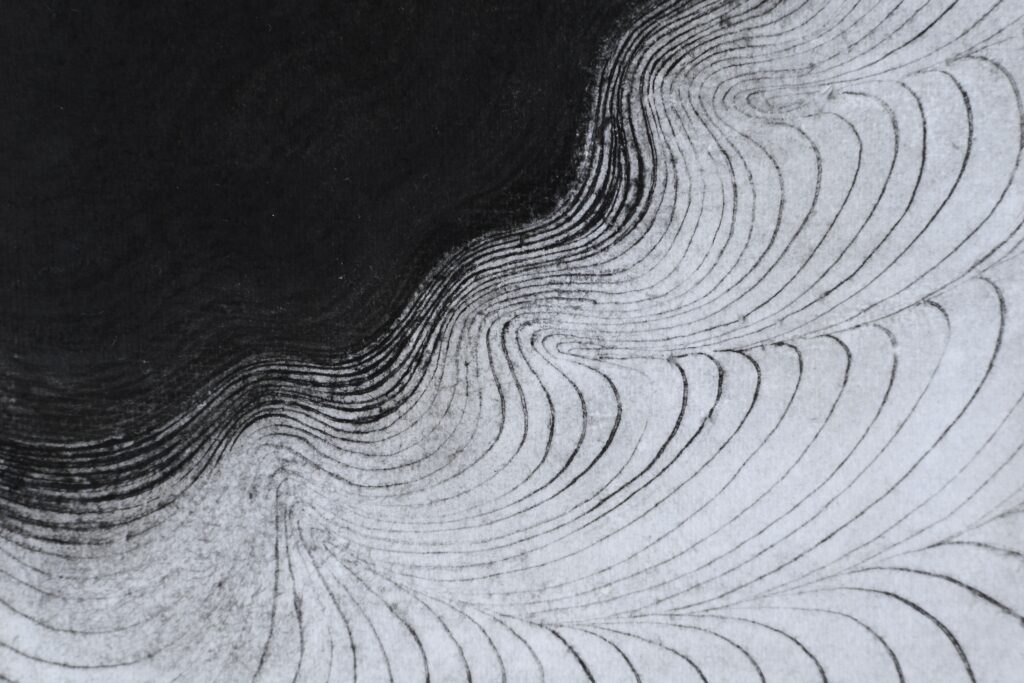
Topography | Expansion | 224284
Ink and charcoal on handmade cotton paper
ca. 21.5 x 28 cm
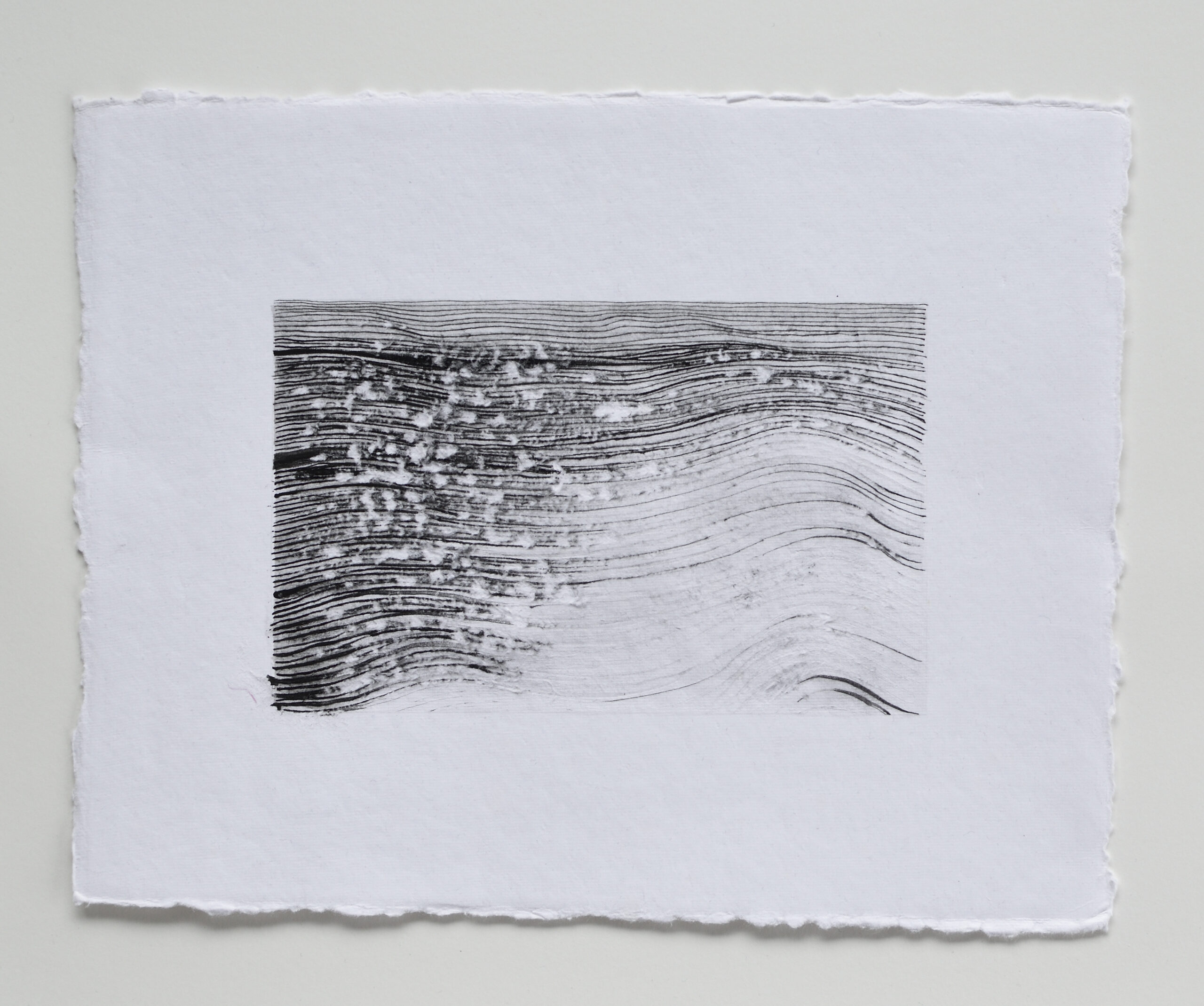
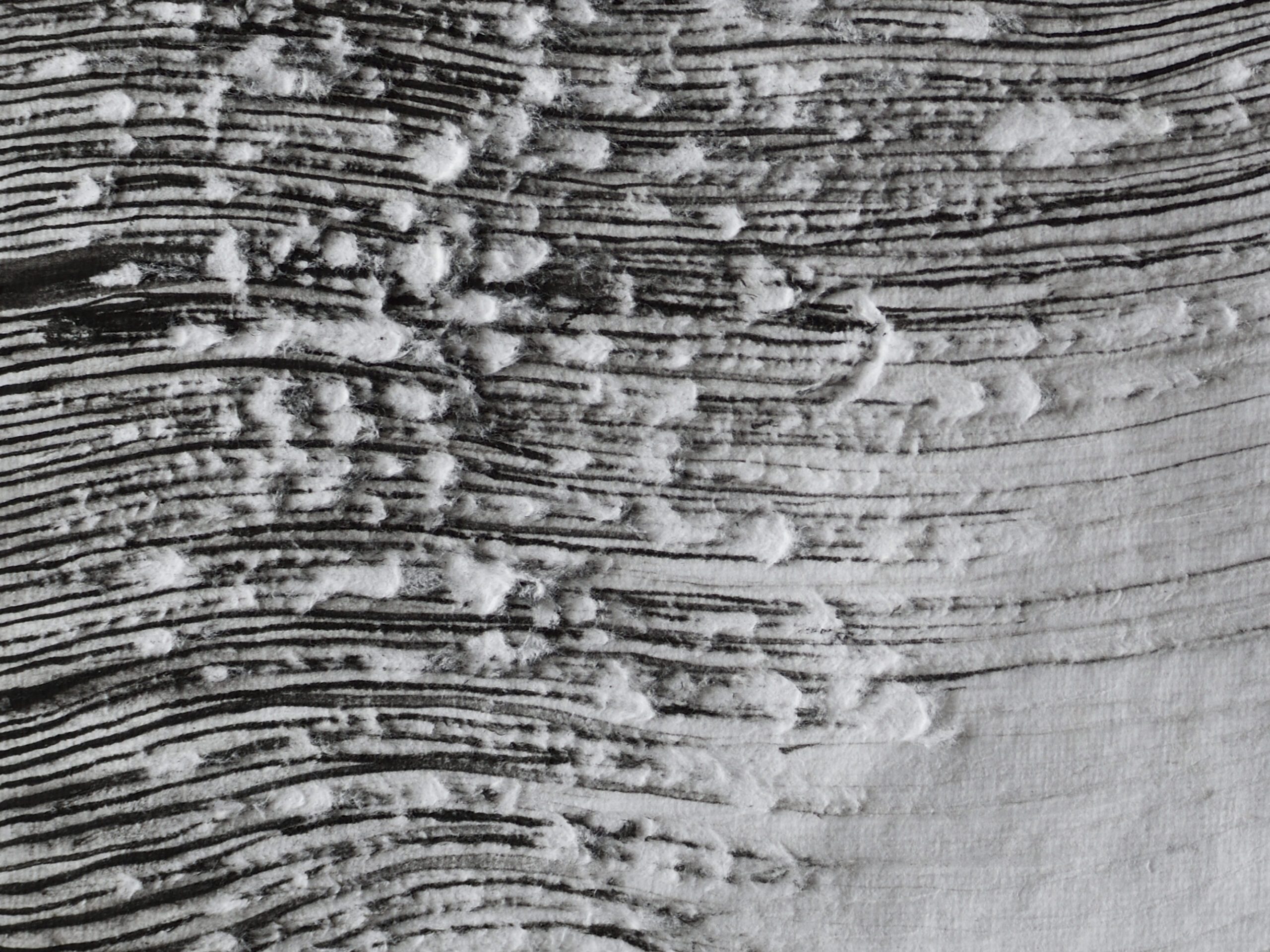
Topography | Release | 221284
Ink on handmade cotton paper
ca. 21.5 x 28 cm
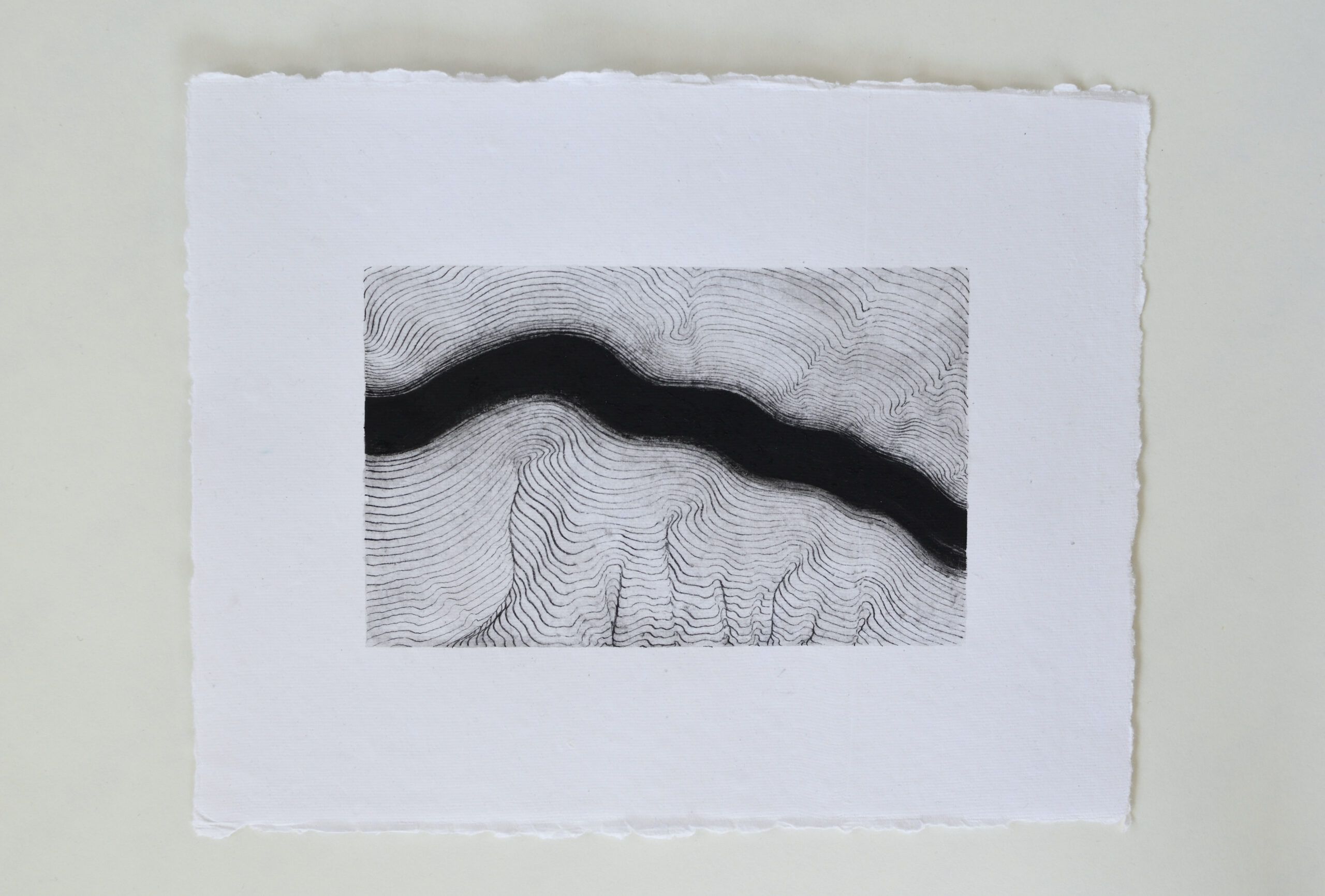
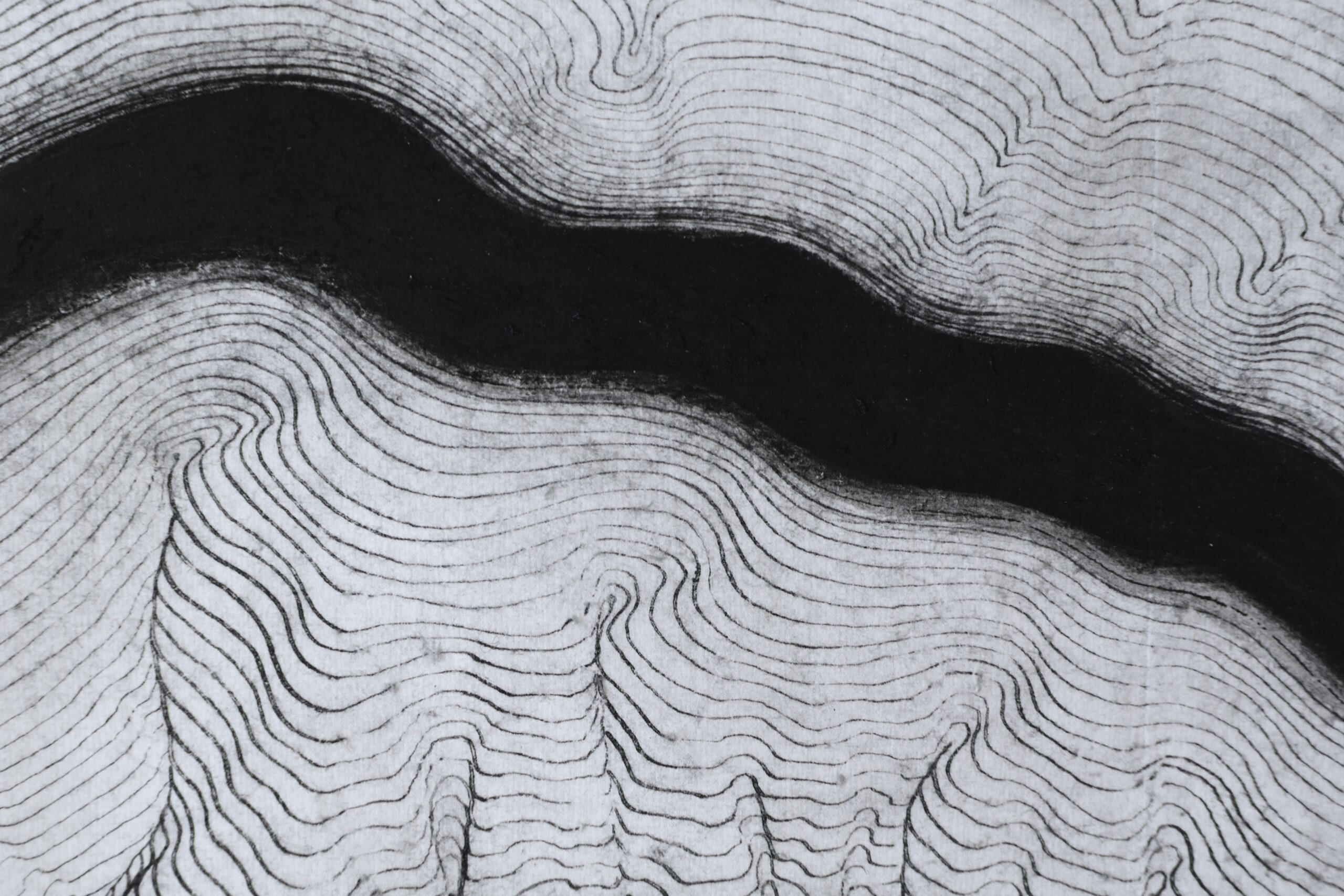
Topography | Ridge | 224281
Ink and charcoal on handmade cotton paper
ca. 21.5 x 28 cm
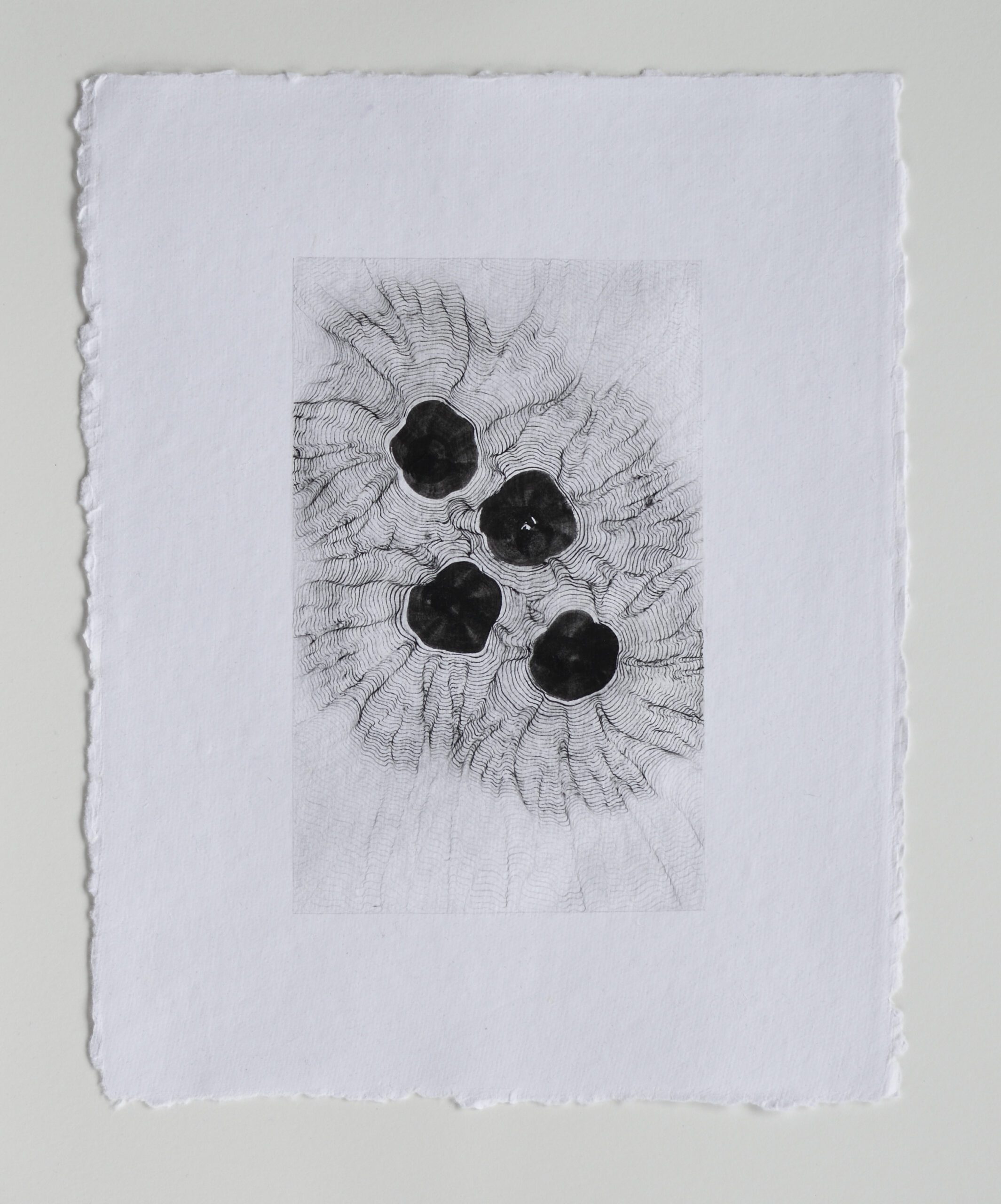
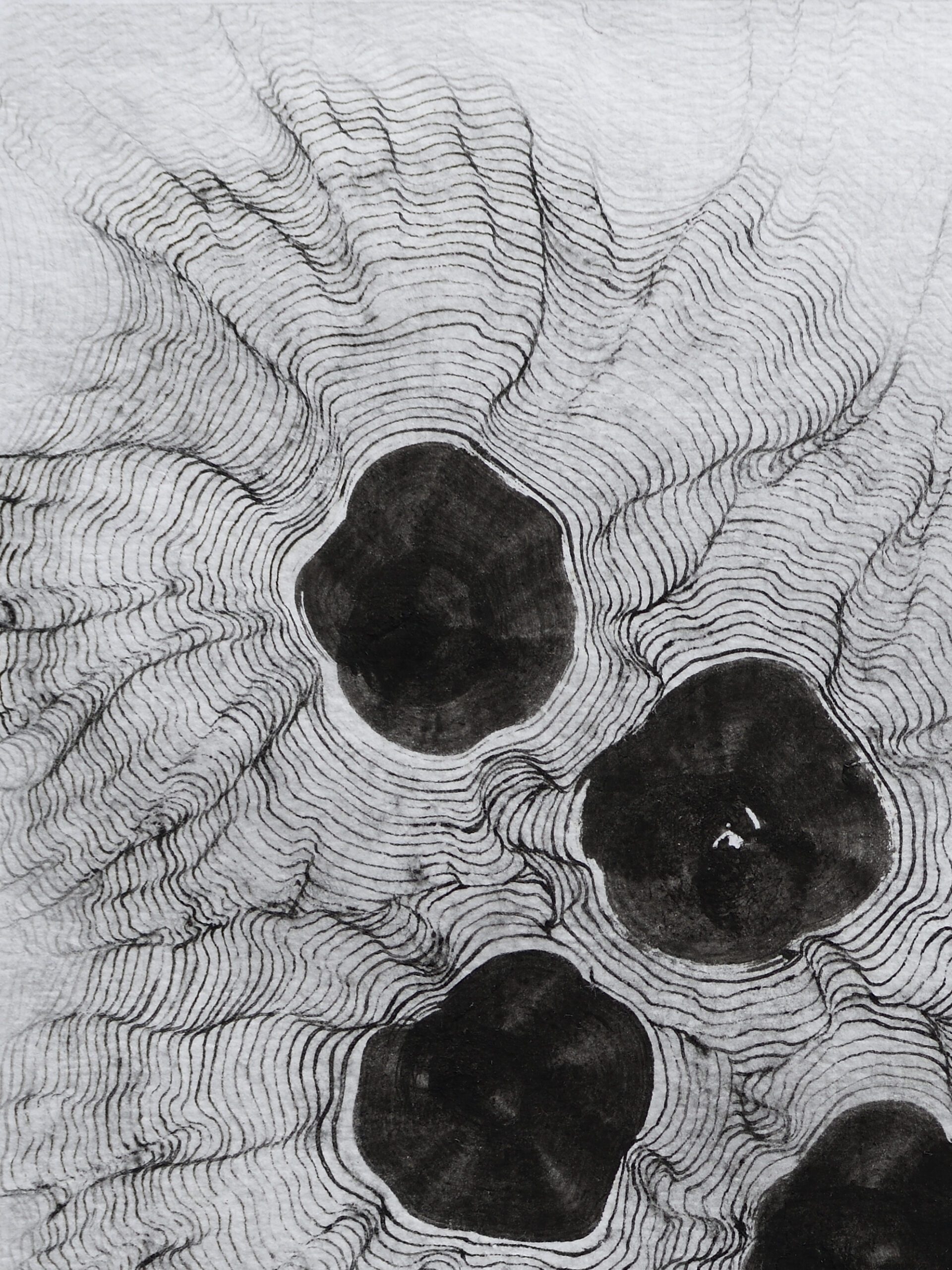
Formation | Existence | 282226
Ink on handmade cotton paper
ca. 28 x 21.5 cm
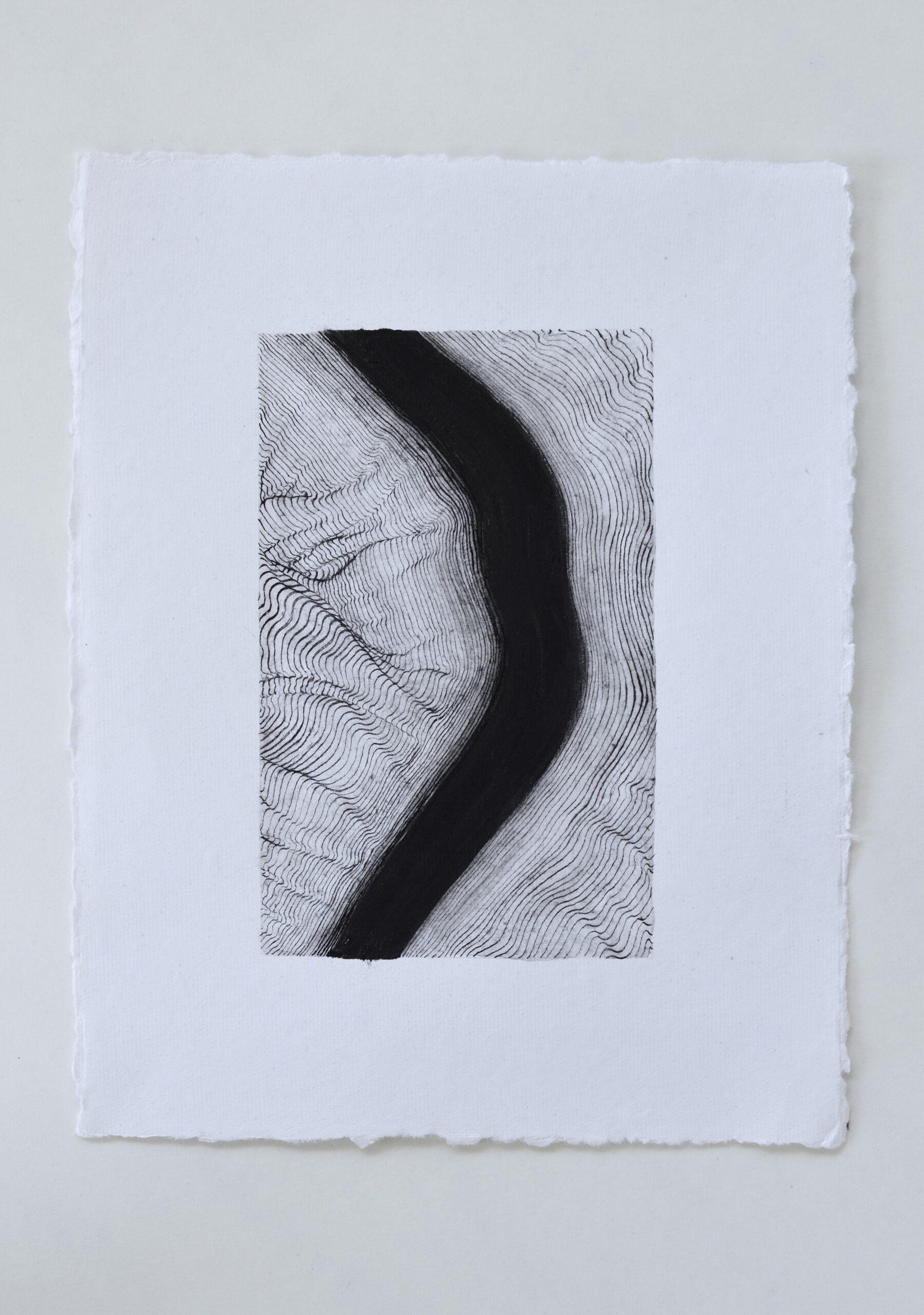
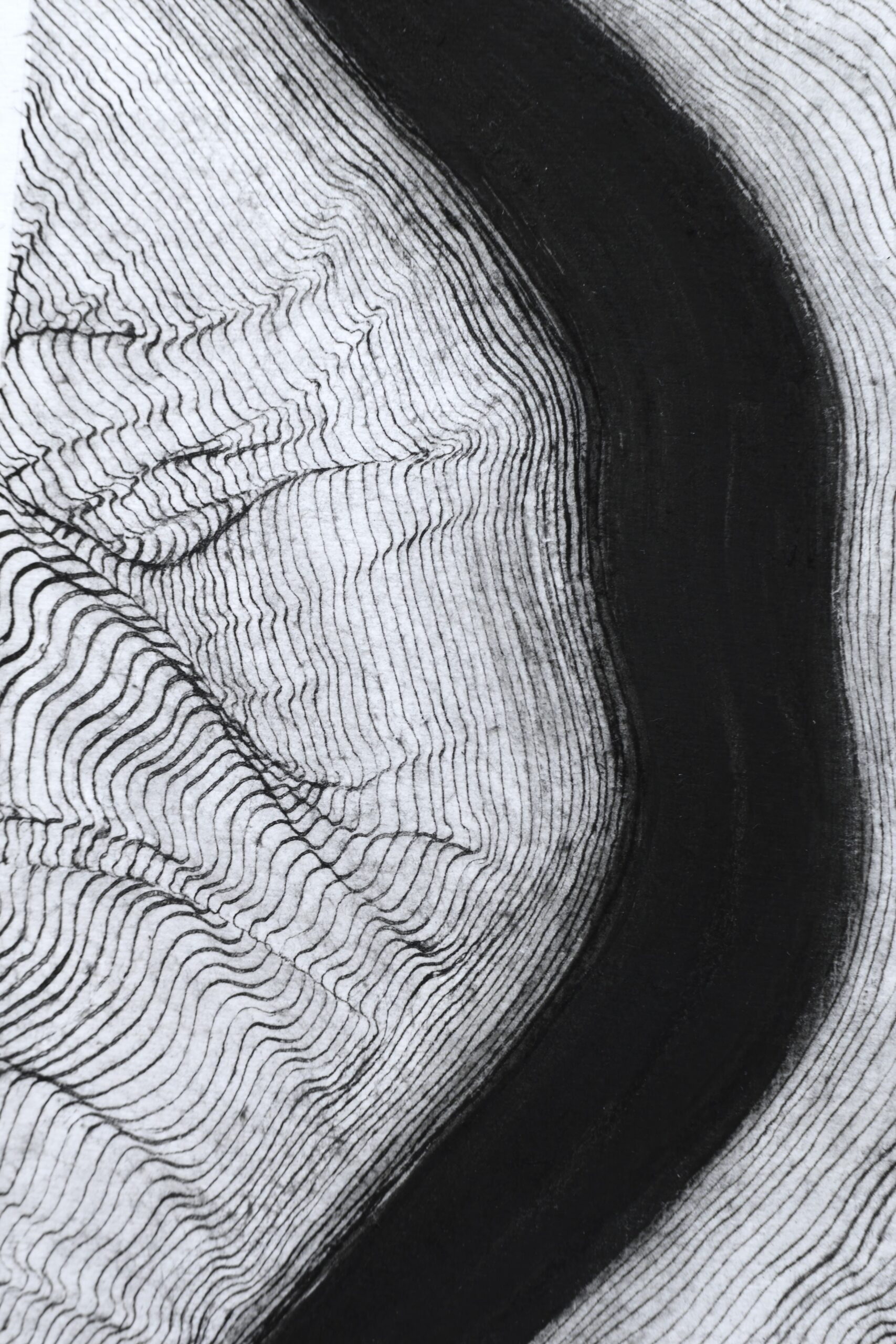
Topography | Flexion | 223283
Ink and charcoal on handmade cotton paper
ca. 28 x 21.5 cm
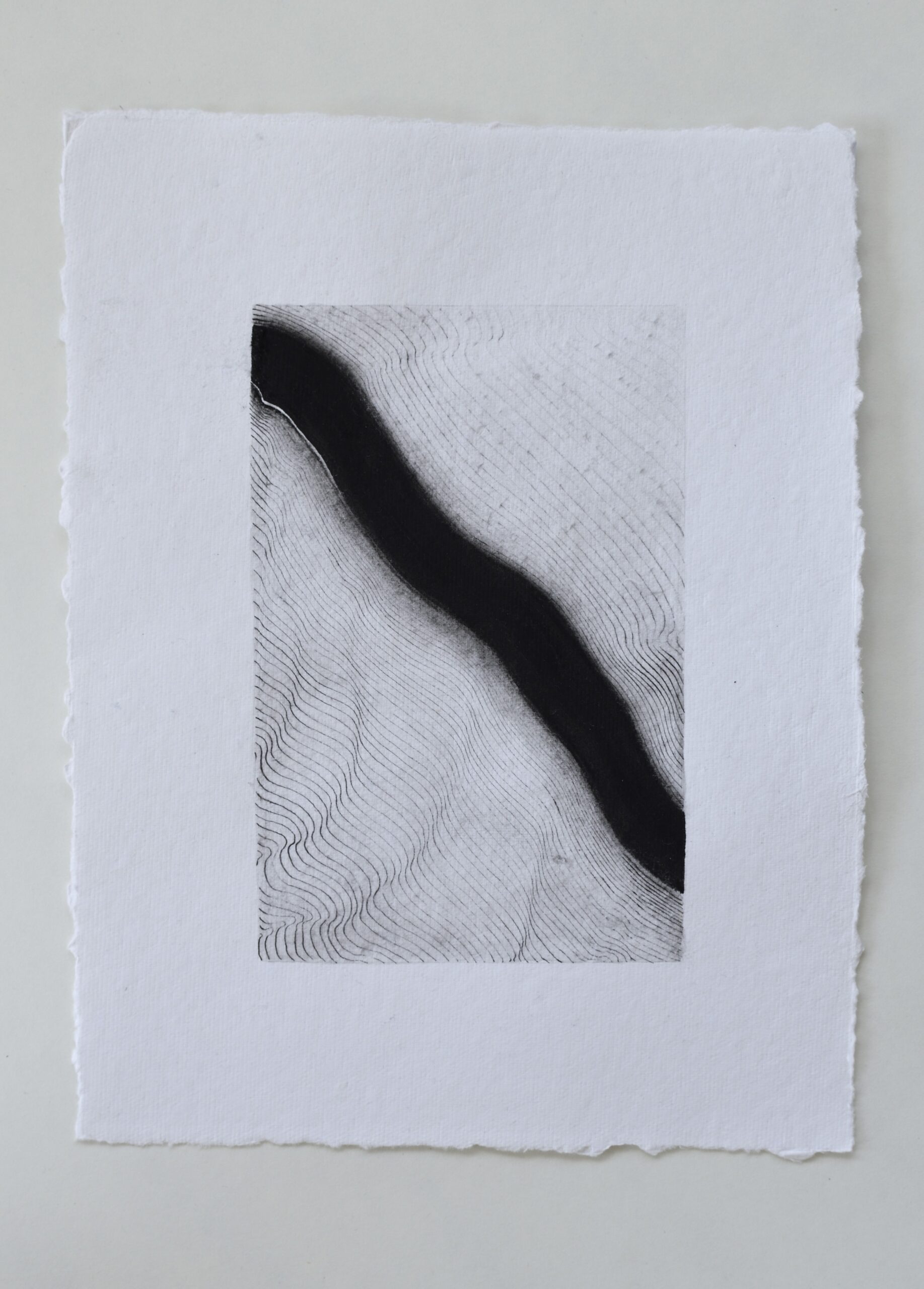
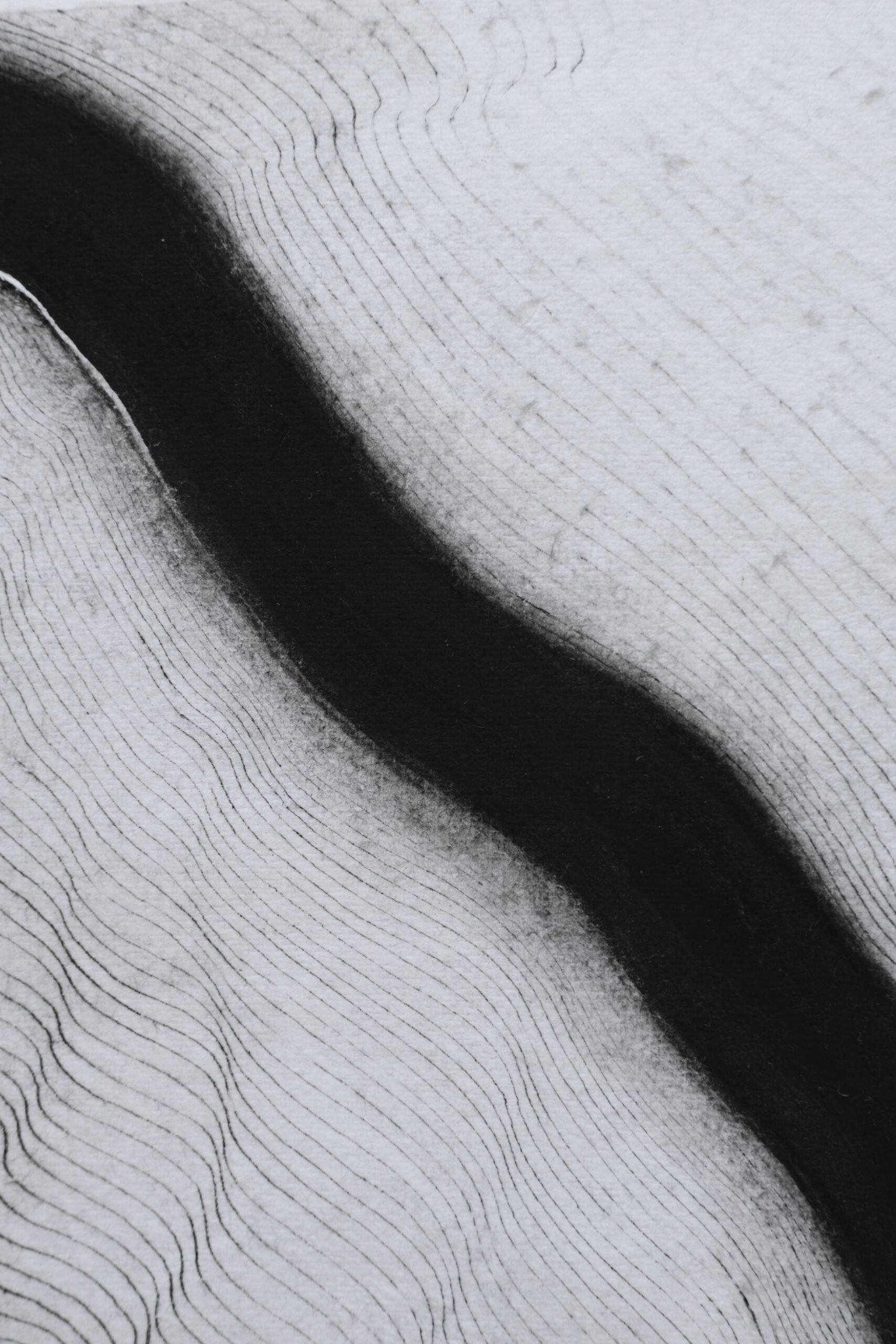
Topography | Plateau | 216282
Ink and charcoal on handmade cotton paper
ca. 28 x 21.5 cm
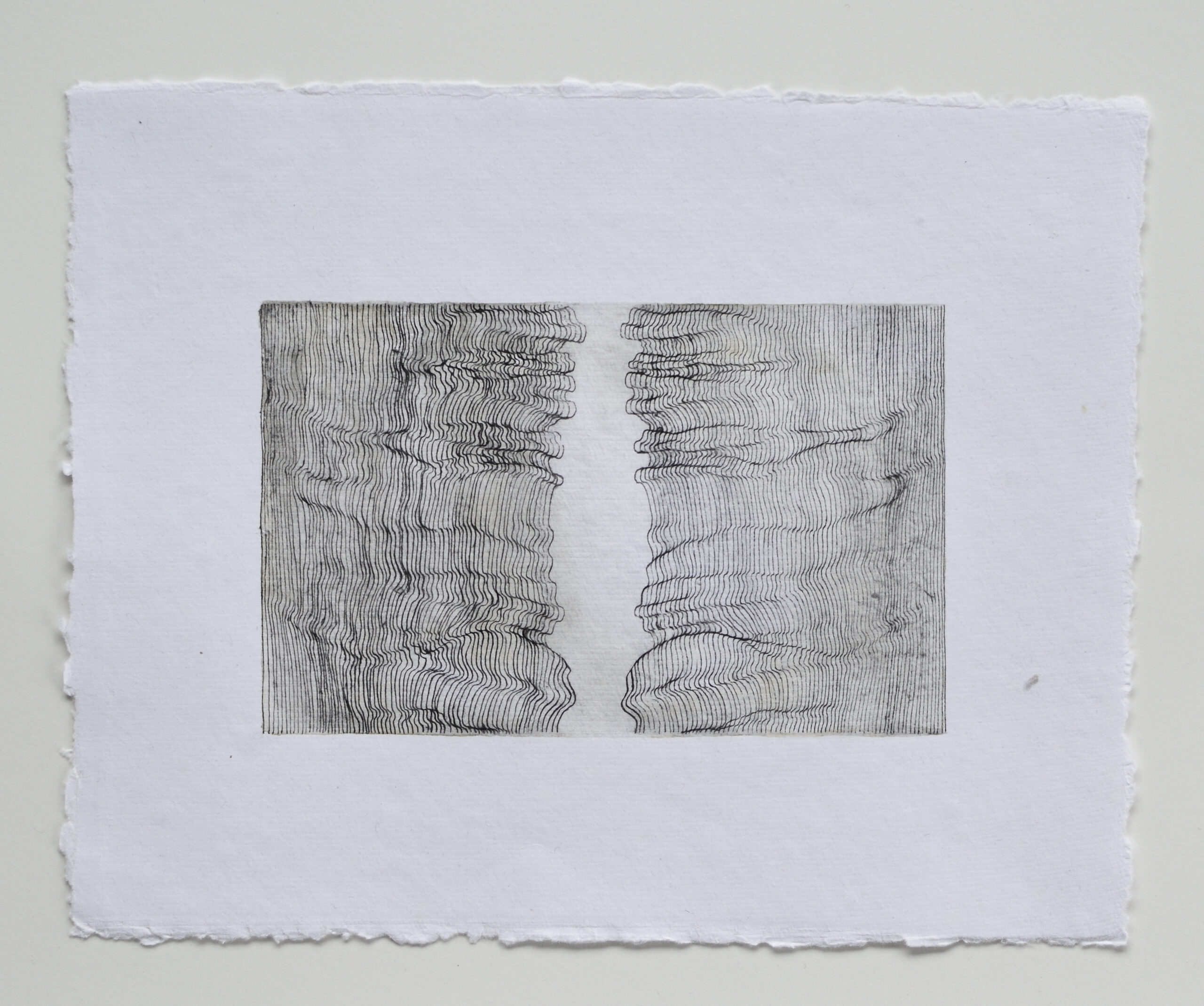
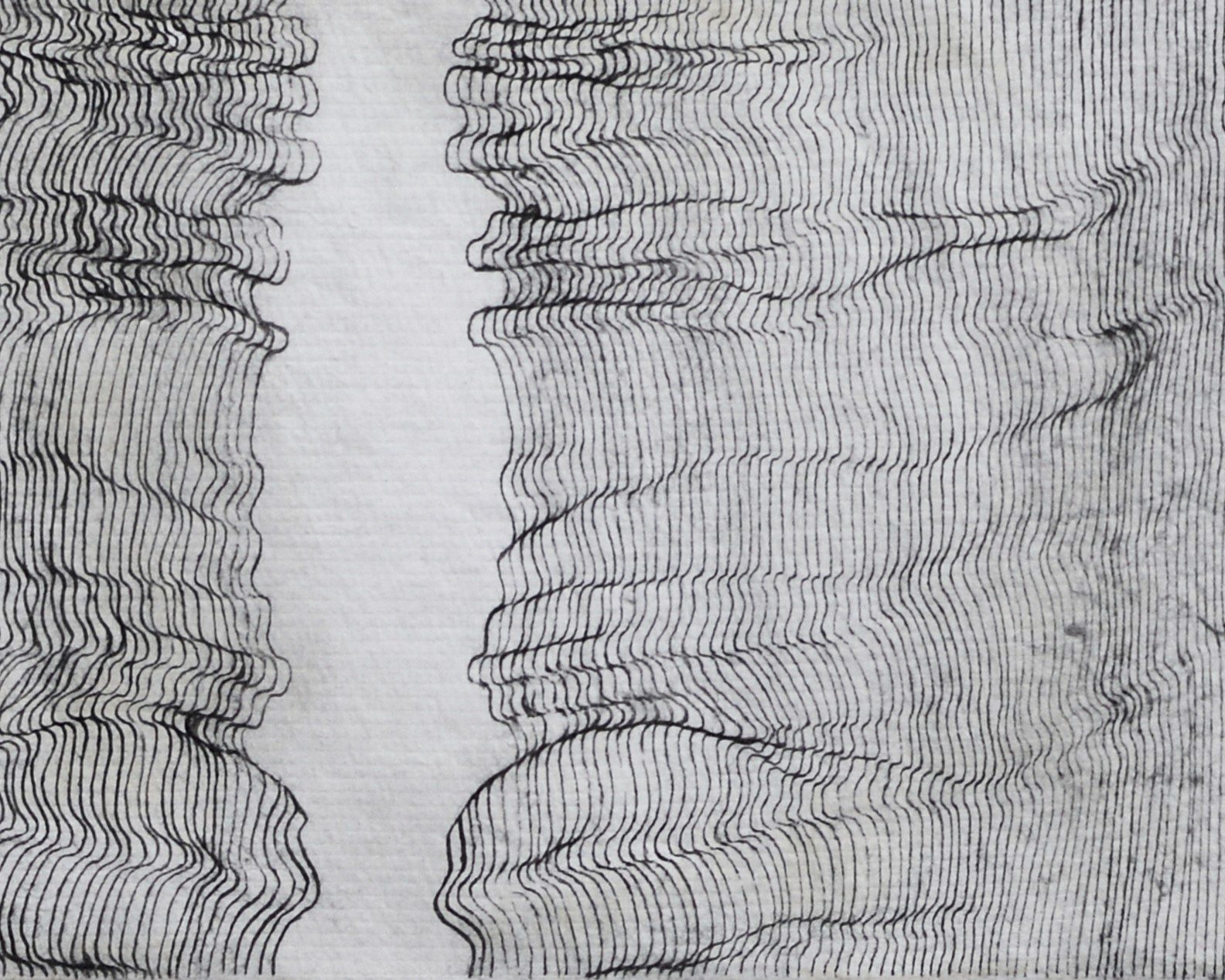
Topography | Second Surface | 224280
Ink on handmade cotton paper
ca. 21.5 x 28 cm
Material and technical studies for the Twin Studies series
In Coral, I experimented with deckle-edge cotton paper, using Prussian blue instead of Indigo. As well as the materials and the line technique, it was an experiment on my abilities for continuous, performative drawing.
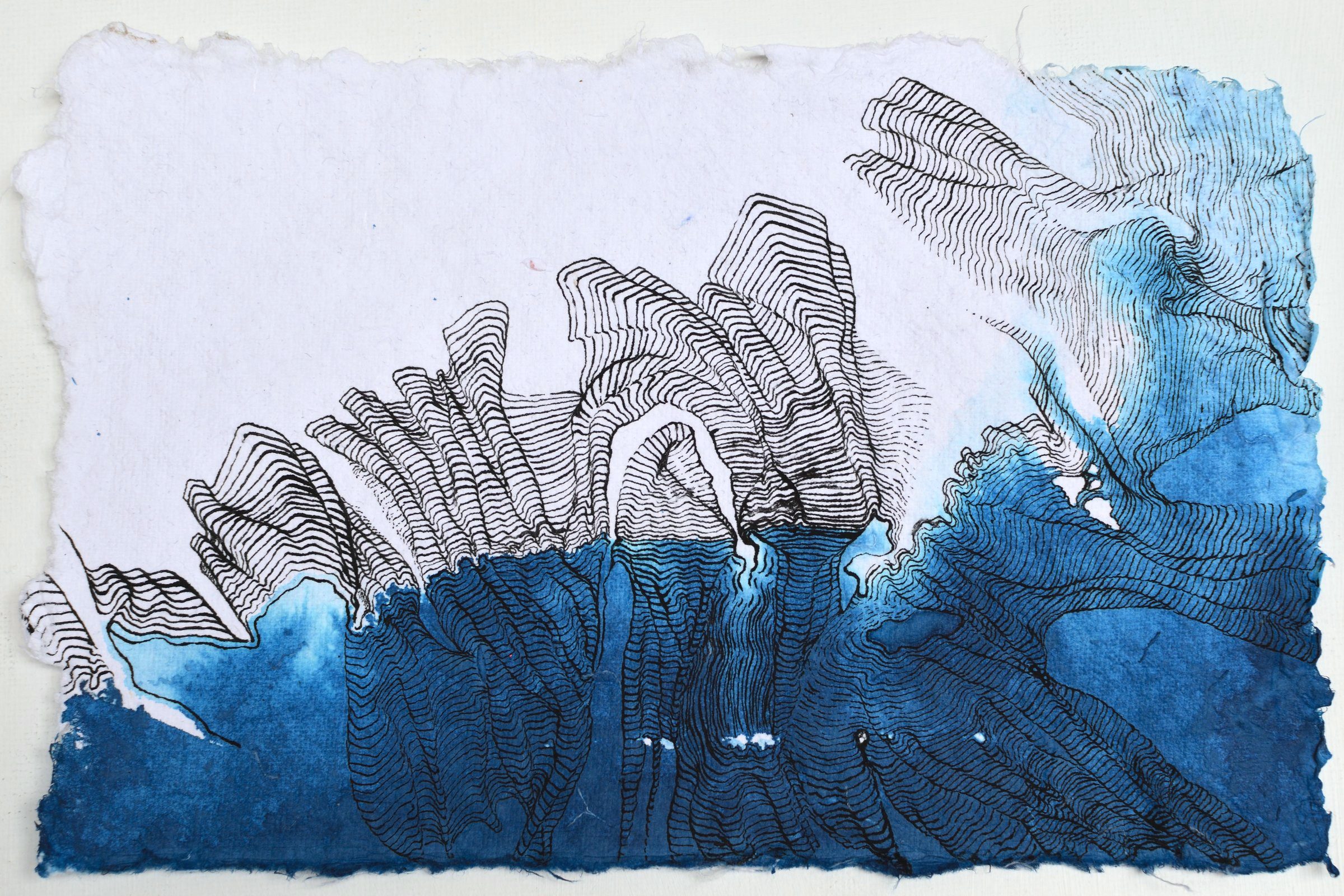
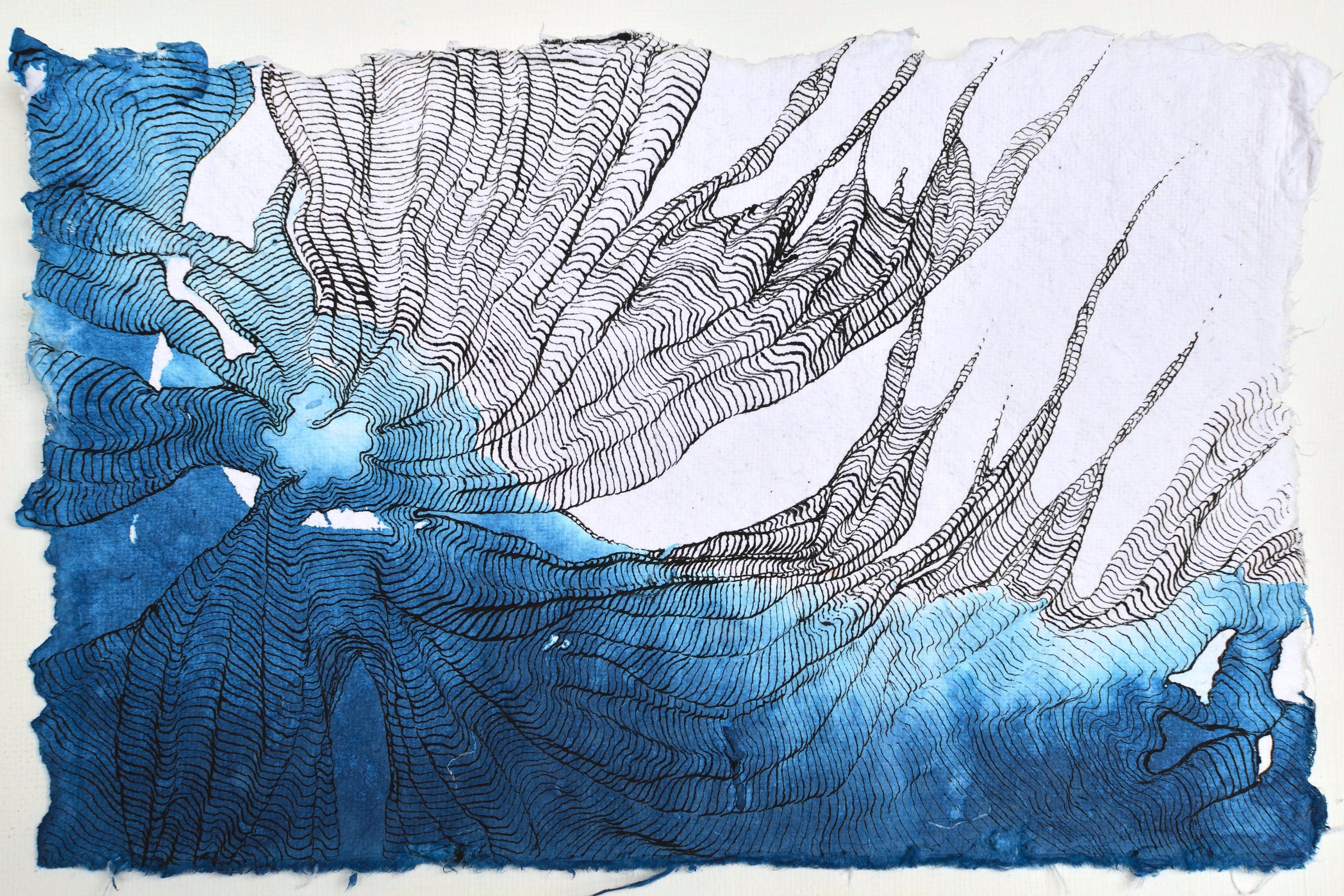
Coral, 2026
Liquid watercolor and ink on handmade cotton paper
Diptych, ca. 9 x 12 cm (each)
The title, Coral, references the organic structure of the image. To mirror the growth of a reef, I created it in a single five-hour “continuum” without interruption. The two halves share an identical material composition, having been torn from the same original sheet of paper.
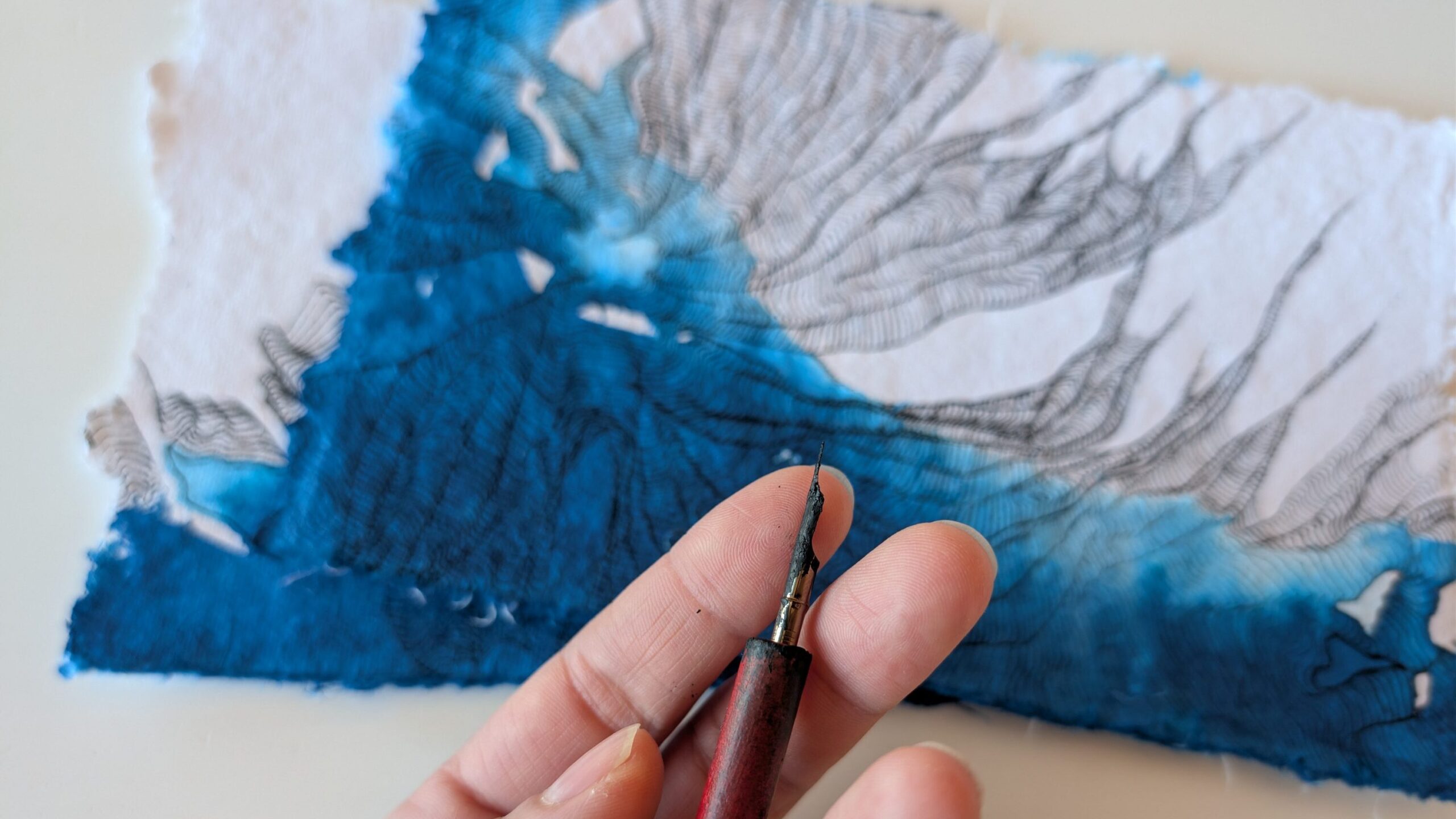
Instrument: A single nib used for the 5-hour drawing session on Coral.
This monochromatic Indigo study tests mark-making and wash directions that look like a strait, which I kept for The Strait in the final series, even though I ultimately changed the color to Indian ink.
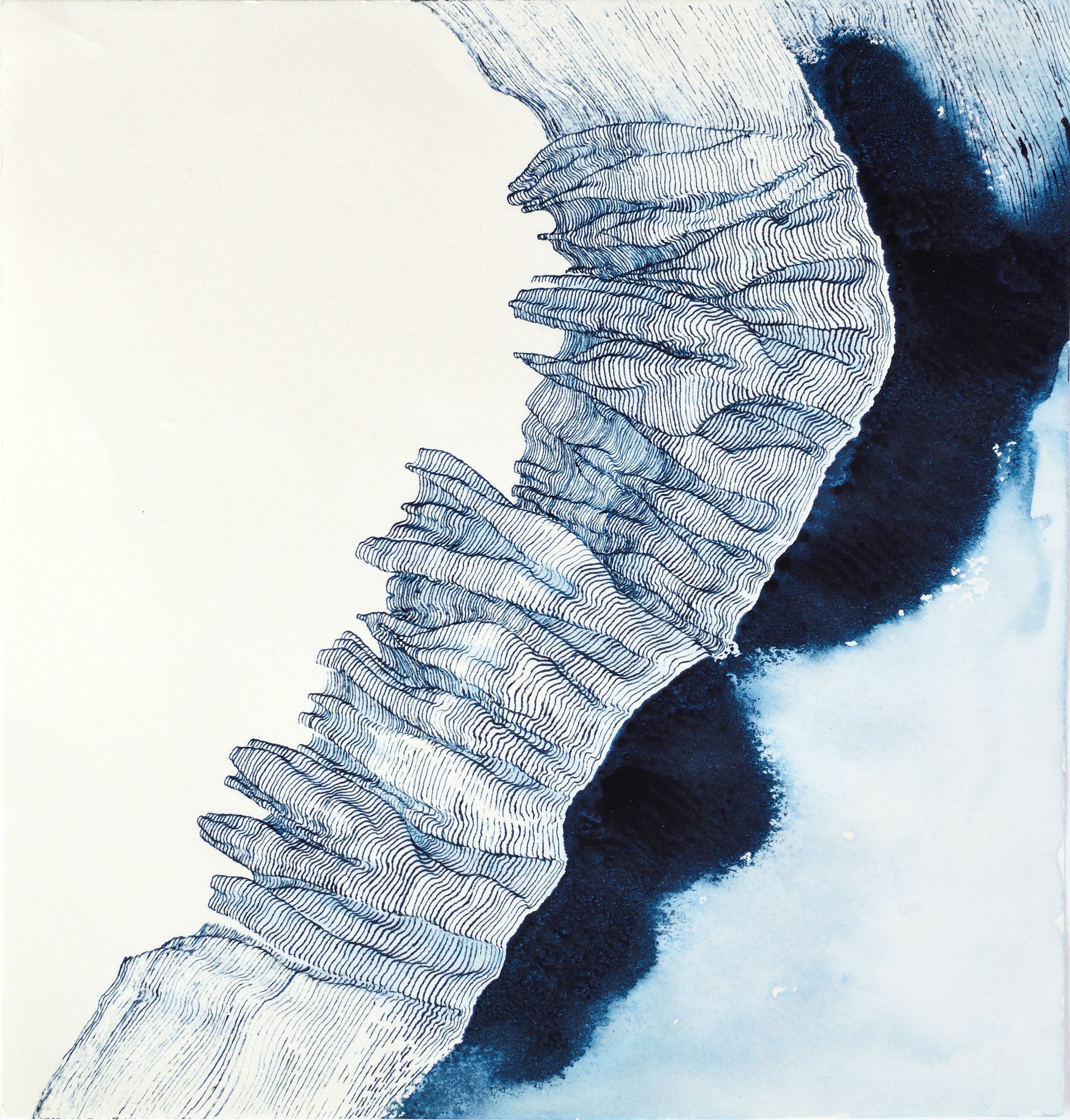
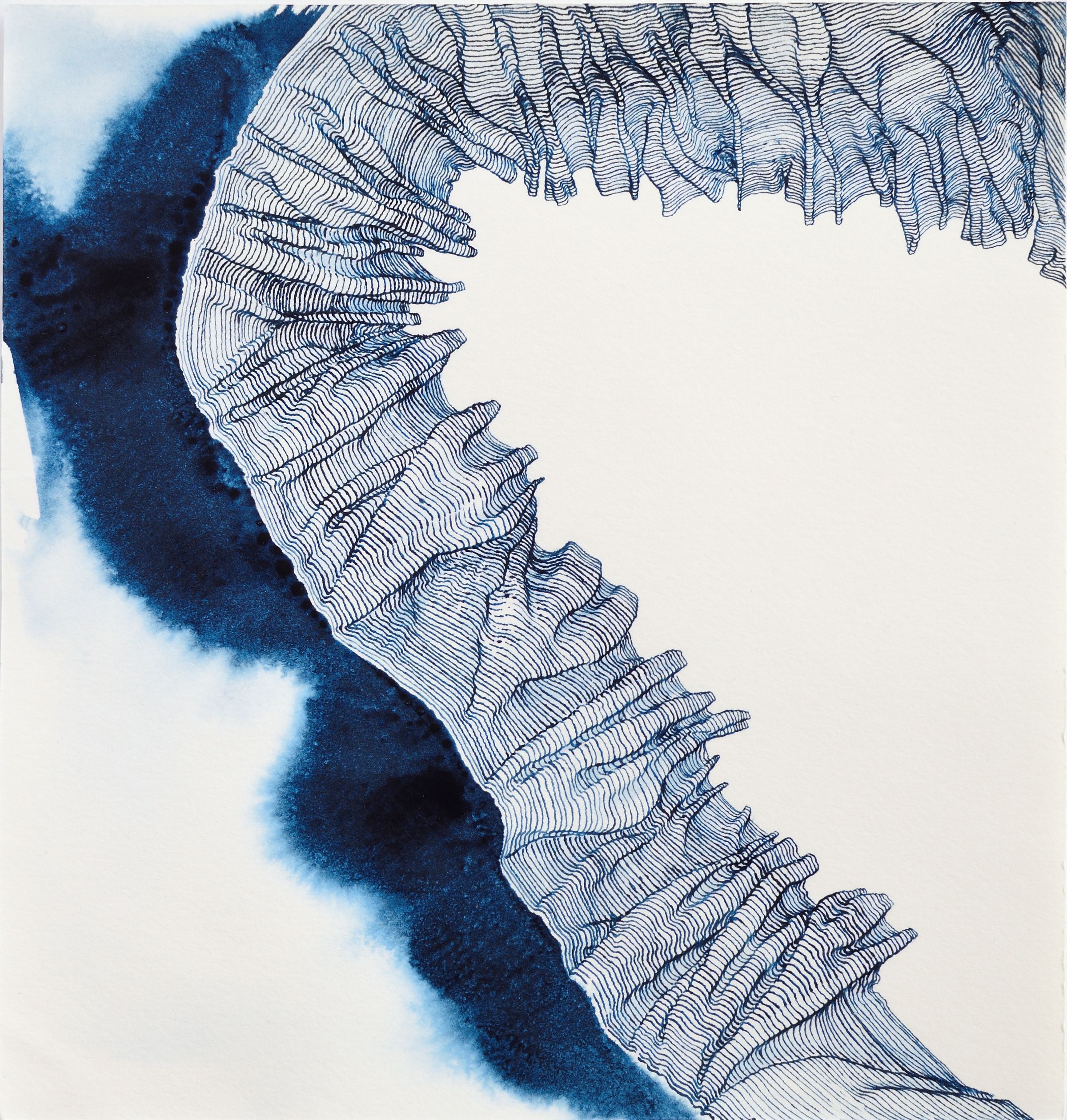
Indigo Study, 2025
Acrylic ink on a removed journal page
Diptych, 19.4 x 18.7 cm (each)
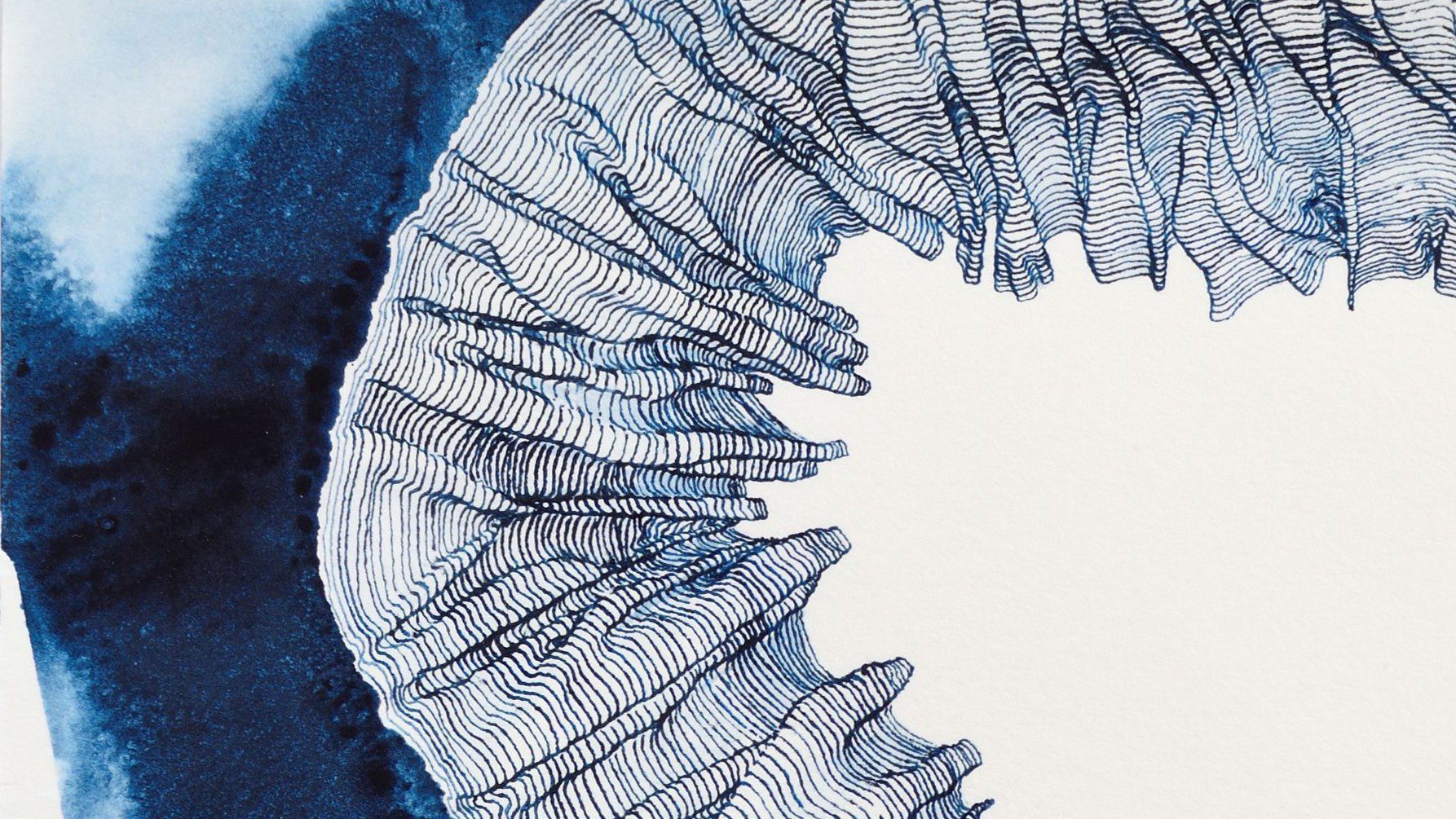
Close-up on Indigo Study B
From sketch to canvas: the evolution of a sketch
This sketch is a recurring motif in my work, and I am inclined to revisit it once more with a dip pen and Indian ink. I love the sea and diving; drawing her waving hair underwater is how I stay connected to the water, or at least my longing for it.
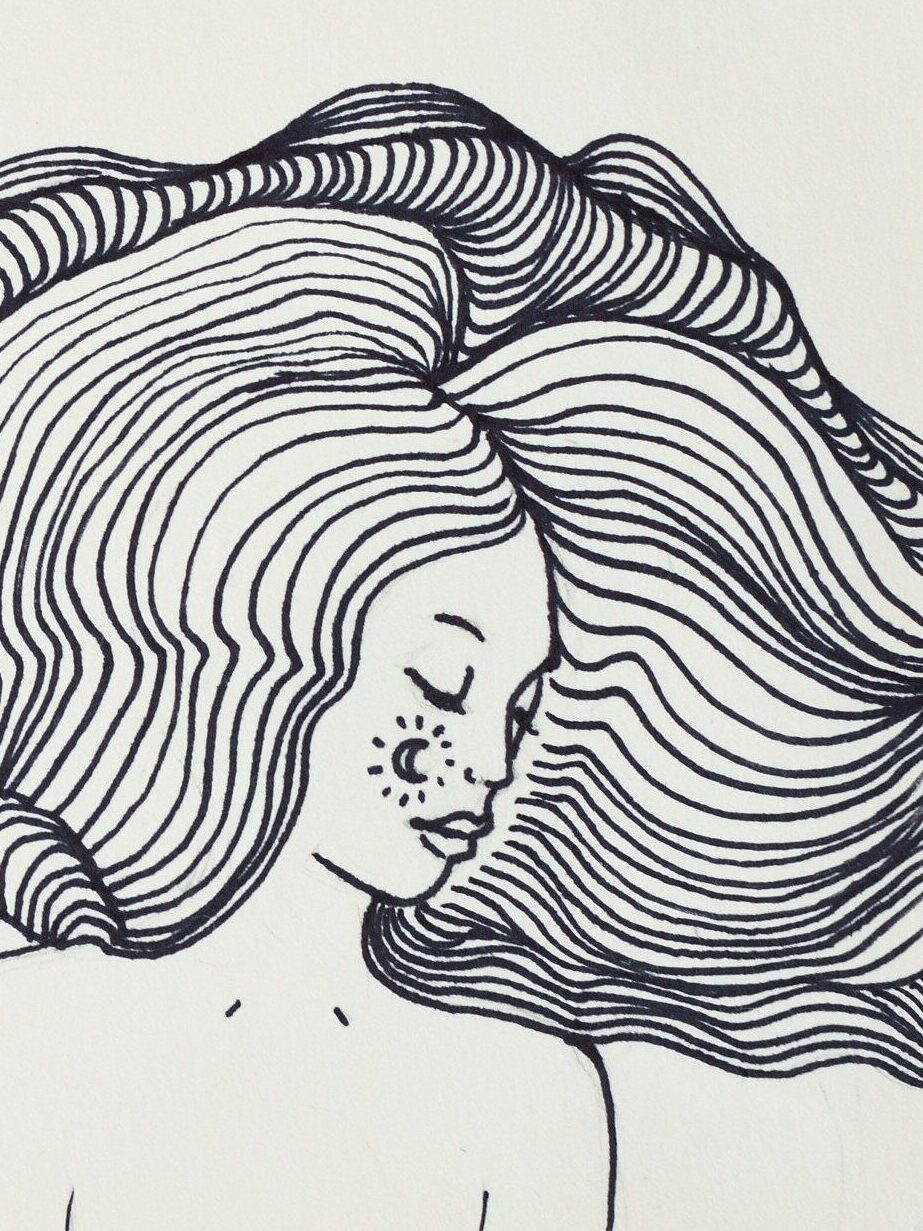
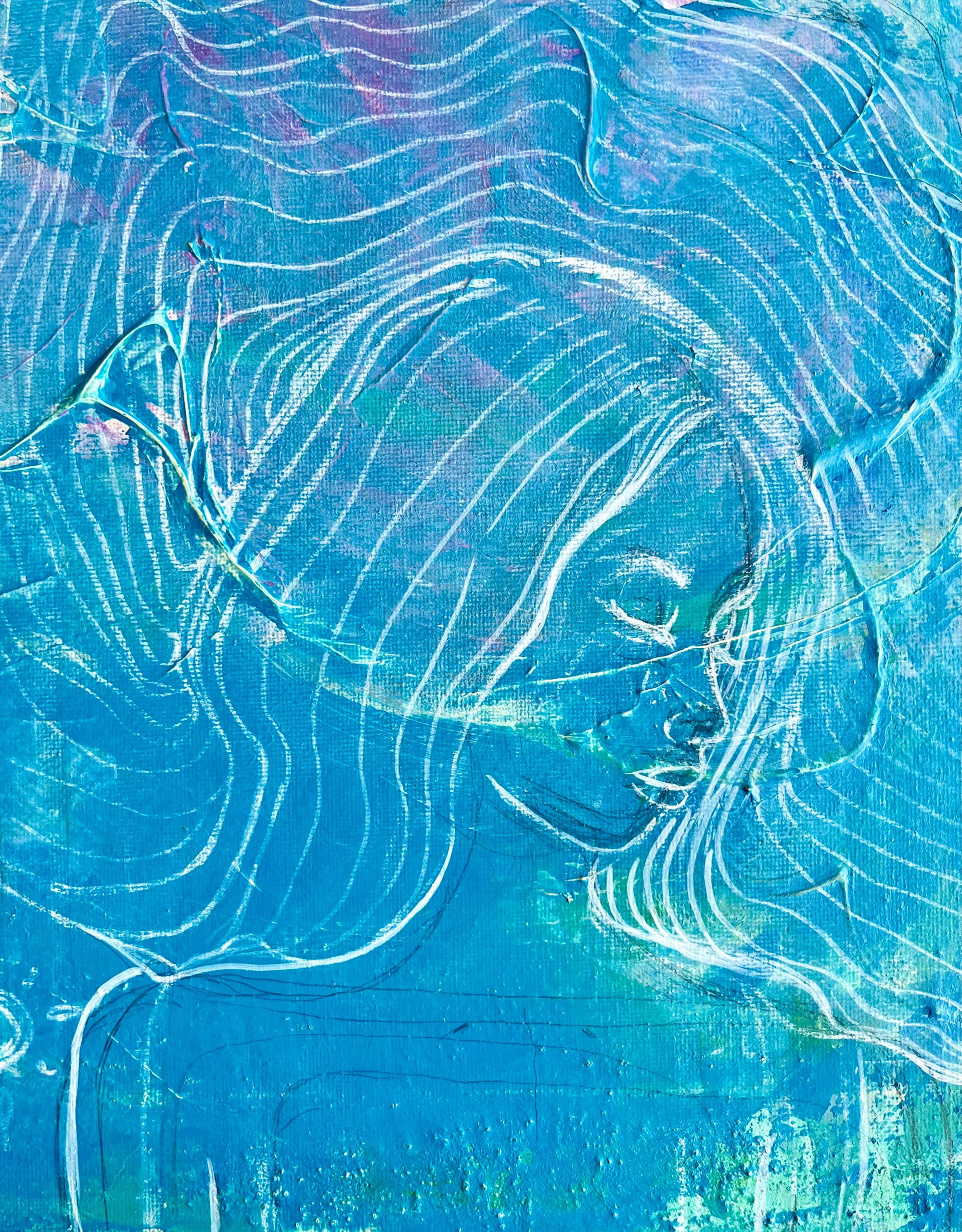
Initial sketch, 2024, drawn on a journal with pigment pen during a flight.
First sketch, 2025, over the canvas.
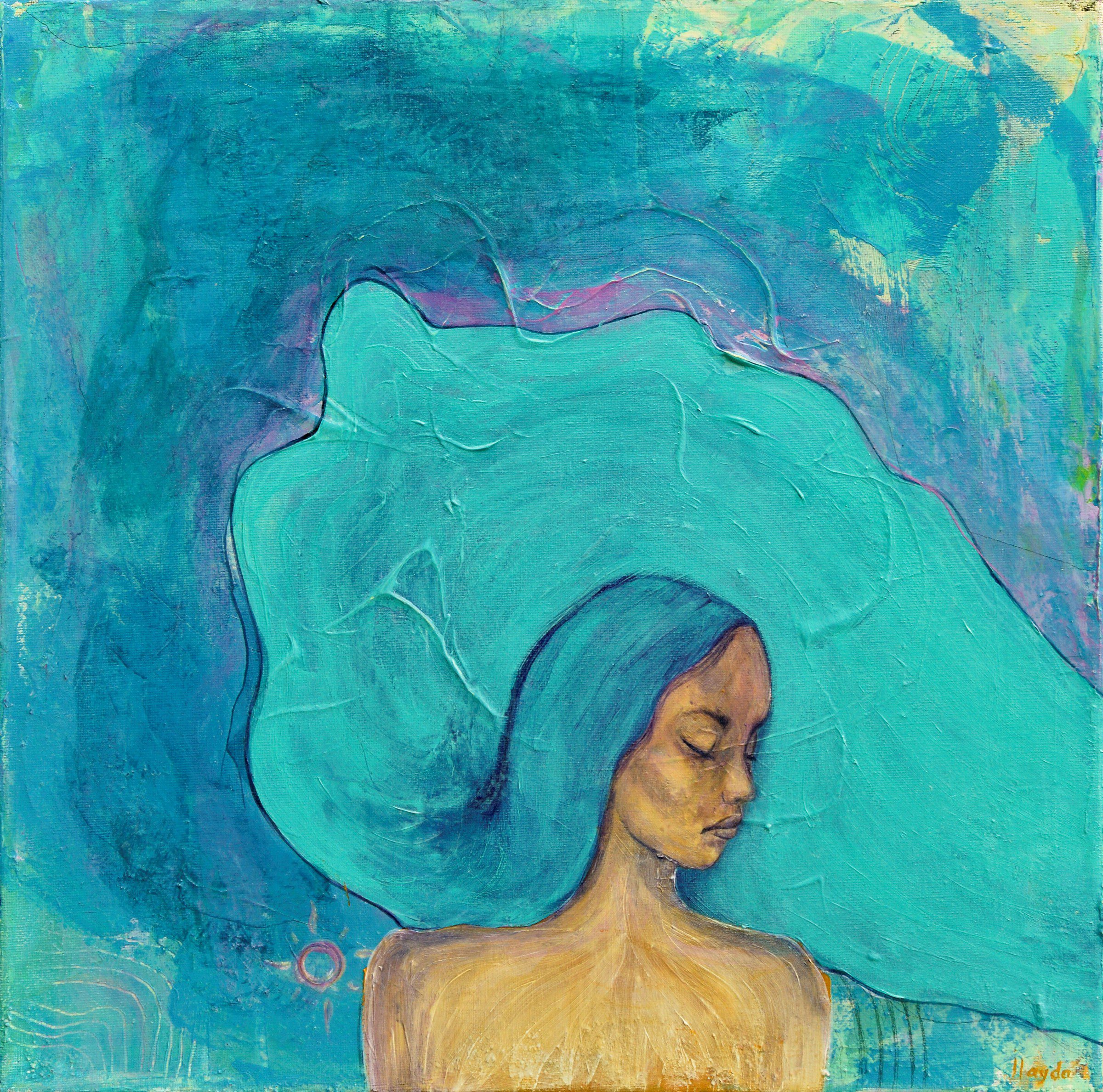
Echoes, 2025
Acrylic on canvas
40 x 40 cm
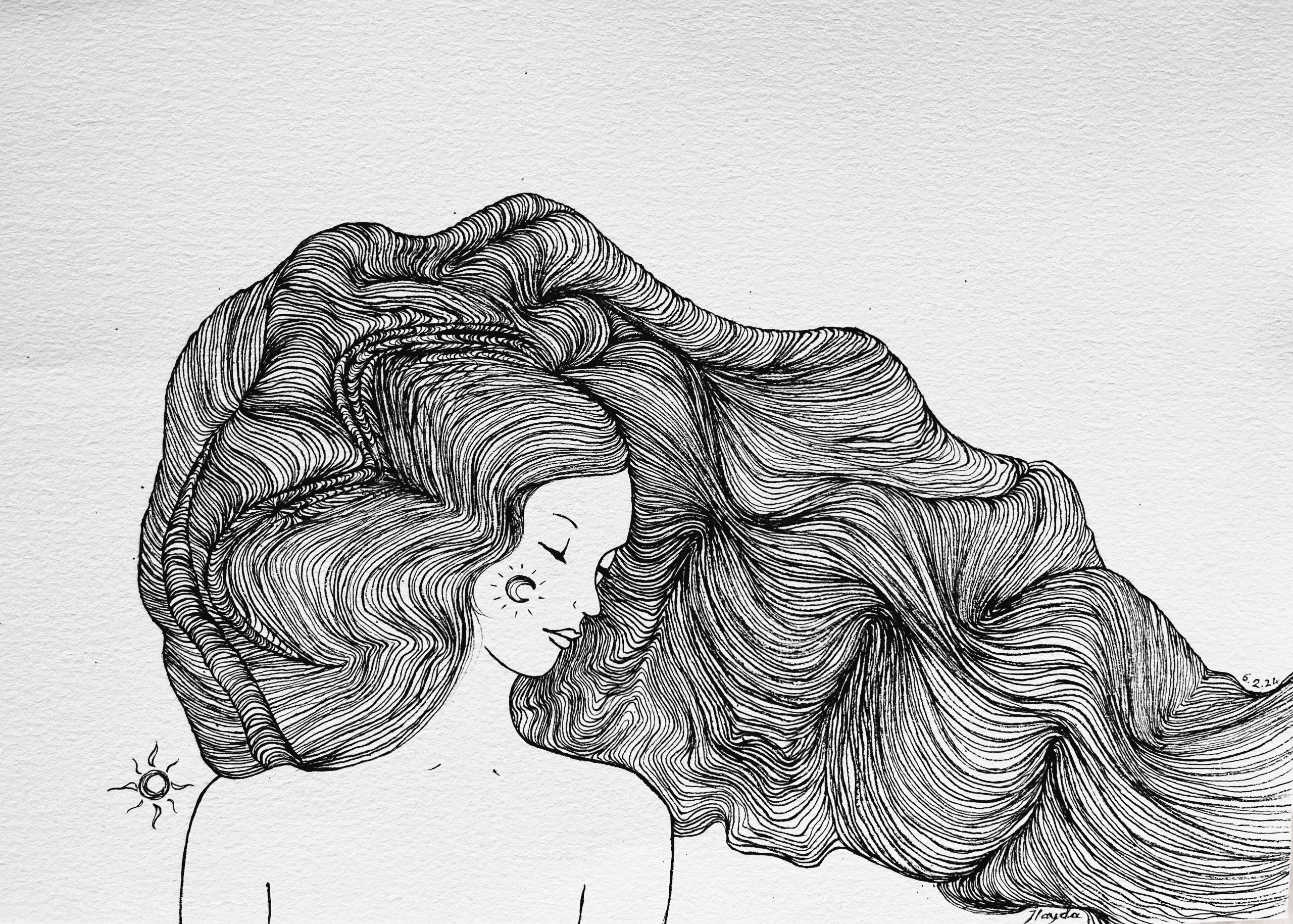
Strand, 2024
Watercolor on cotton paper
21 x 29.7 cm